Appendicular Abscess
Appendicular abscess is a localized collection of pus that develops as a complication of appendicitis. It usually occurs when an inflamed appendix perforates or becomes severely infected, leading to the formation of a confined pocket of infection within the abdominal cavity.
The body may attempt to contain the infection by surrounding it with nearby tissues such as the intestines or omentum, resulting in an abscess. Prompt medical evaluation is important to determine the appropriate management approach.
Management of appendicular abscess depends on the size of the abscess, severity of infection, and the overall condition of the patient. This page provides general information about appendicular abscess and its management.
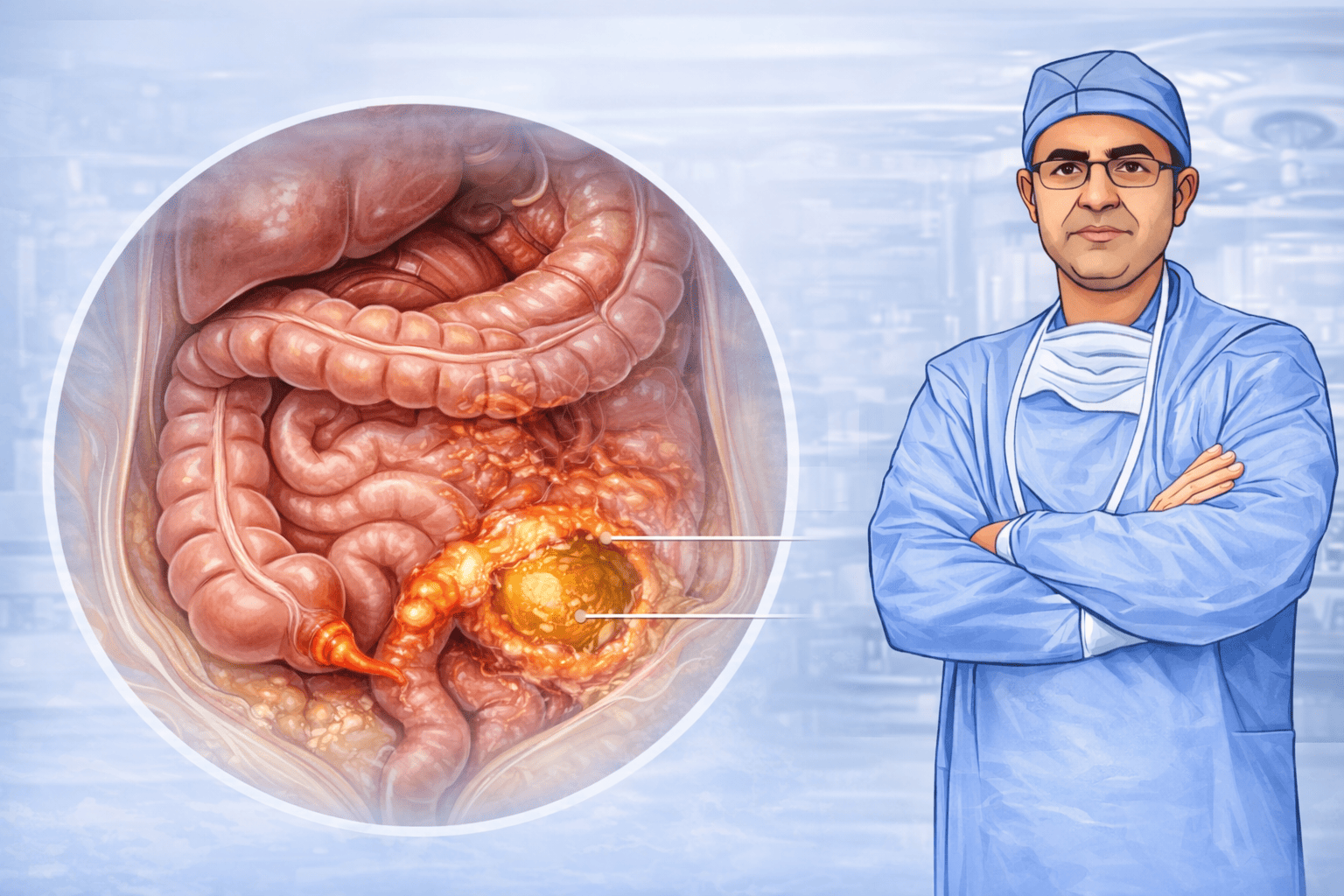
Understanding Appendicular Abscess
The appendix is a small, tube-shaped organ attached to the large intestine. When the appendix becomes inflamed, a condition known as appendicitis may develop.
In some cases, untreated or severe appendicitis can lead to rupture or leakage of the appendix. This may allow infection to spread into the surrounding tissues, forming a localized abscess.
Appendicular abscess is considered a complication of appendicitis and requires medical evaluation and treatment.
Causes of Appendicular Abscess
Appendicular abscess usually develops due to complications of appendicitis. Possible contributing factors may include:
- Delayed diagnosis or treatment of appendicitis
- Obstruction of the appendix by fecal material
- Infection causing severe inflammation
- Rupture or perforation of the appendix
Early diagnosis and treatment of appendicitis can help reduce the risk of abscess formation.
Common Symptoms
Symptoms of appendicular abscess may vary depending on the severity of infection. Common symptoms may include:
Pain in the lower right side of the abdomen
Fever and chills
Loss of appetite
Abdominal tenderness or swelling
Symptoms may gradually worsen if the condition is not treated.
Diagnosis of Appendicular Abscess
Diagnosis is based on clinical assessment and diagnostic investigations, which may include:
- Clinical examination and medical history
- Blood tests to identify infection or inflammation
- Imaging studies such as ultrasound or CT scan
- Additional tests if required
Imaging studies help determine the presence, size, and location of the abscess.
Role of Treatment in Appendicular Abscess
Treatment focuses on controlling the infection and managing the abscess. The treatment approach may depend on several factors, including:
- Size and location of the abscess
- Severity of infection
- General health condition of the patient
In some cases, initial treatment may involve antibiotics and drainage of the abscess before considering surgical removal of the appendix.
Types of Treatment Approaches
Based on clinical findings, treatment options may include:
- Antibiotic therapy
- Image-guided drainage of the abscess
- Appendectomy in selected cases
- Supportive medical care during recovery
The appropriate treatment plan is determined after clinical evaluation by the treating healthcare team.
Pre-treatment Assessment
Before treatment, patients generally undergo:
- Clinical evaluation
- Imaging studies such as ultrasound or CT scan
- Laboratory investigations
- Assessment of overall medical condition
These evaluations help guide appropriate treatment planning.
About the Author of This Information
Disclaimer