Hernia

Laparoscopic Hernia Repair
Hernia

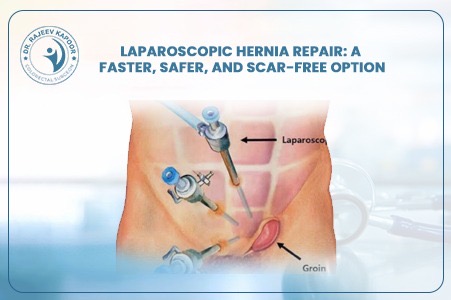
Laparoscopic Hernia Repair: A Faster, Safer, and Scar-Free Option

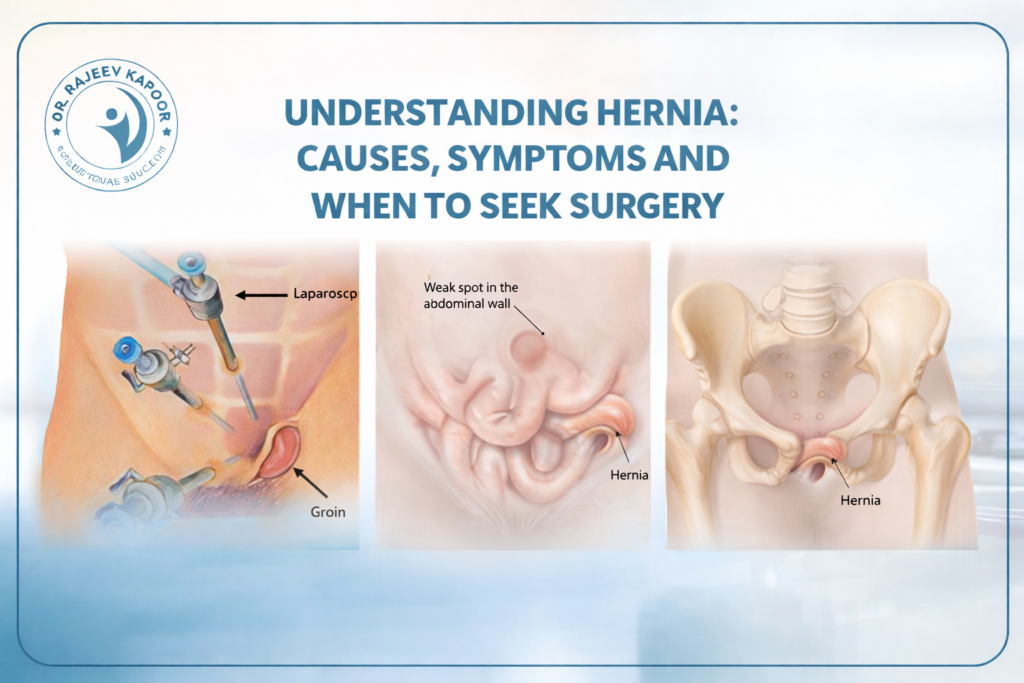
Gone are the days when hernia surgery meant long incisions, painful recovery, and weeks away from work. With the advent of laparoscopic hernia repair, patients now enjoy a quicker, safer, and far more comfortable experience. “Laparoscopy has transformed hernia treatment into a day-care procedure — patients walk home the same day with minimal pain,” says Dr. Rajeev Kapoor, senior gastrointestinal and laparoscopic surgeon in Chandigarh. 1️⃣ What Is Laparoscopic Hernia Repair? Laparoscopic hernia repair, also known as keyhole surgery, involves repairing the hernia through three tiny incisions (each about 0.5–1 cm). A thin tube with a camera (laparoscope) is inserted to provide a magnified, high-definition view of the internal structures. Using specialized instruments, the surgeon gently pushes the protruding tissue back into place and reinforces the weak spot with a surgical mesh, ensuring long-term strength. 2️⃣ How It Differs from Open Surgery Aspect Open Hernia Repair Laparoscopic Hernia Repair Incision Size 6–10 cm (large cut) 0.5–1 cm (keyhole) Pain & Recovery Moderate to high pain, longer rest Minimal pain, rapid recovery Hospital Stay 2–4 days Same-day discharge (24 hrs max) Scarring Visible scar Nearly invisible Recurrence Rate Slightly higher Very low when done by experts Return to Work 10–15 days 3–5 days “With modern mesh technology and precision tools, laparoscopic surgery ensures faster healing and excellent long-term results,” notes Dr. Kapoor. 3️⃣ Who Can Benefit from Laparoscopic Hernia Surgery? Laparoscopic repair is suitable for: Inguinal (groin) hernias — the most common type in men  Bilateral hernias (both sides)  Recurrent hernias (after open surgery)  Umbilical and incisional hernias  Obese patients, where open surgery carries more risk  However, for very large or complicated hernias, Dr. Kapoor carefully evaluates whether a minimally invasive approach is the safest option. 4️⃣ Step-by-Step: The Laparoscopic Procedure General anesthesia is given for patient comfort.  Small incisions are made near the navel.  A laparoscope provides a magnified view of the hernia and surrounding tissue.  The protruding tissue is gently repositioned inside the abdomen.  A medical-grade mesh is placed over the weak area to reinforce the wall.  The incisions are closed with absorbable sutures — leaving minimal or no visible scar.  The entire procedure typically takes 45–60 minutes. 5️⃣ Recovery and Post-Surgery Care Walking: Within 4–6 hours post-surgery  Diet: Light meals on the same day  Return to Work: Usually within 3–5 days  Exercise/Lifting: Avoid heavy weights for 4–6 weeks  Follow-Up: Regular reviews ensure healing and prevent recurrence  “Most of my patients resume routine activities within a week — it’s that smooth and safe,” shares Dr. Kapoor. 6️⃣ Advantages of Laparoscopic Hernia Repair ✅ Smaller incisions, minimal pain ✅ Shorter hospital stay or same-day discharge ✅ Early mobility and faster return to daily life ✅ Reduced infection and recurrence rates ✅ Cosmetic benefit – almost no visible scar 7️⃣ Why Choose Dr. Rajeev Kapoor for Hernia Surgery Over two decades of surgical expertise in gastrointestinal and laparoscopic procedures  Specialized in complex hernias and recurrent cases  Uses international-grade mesh and advanced laparoscopic systems  Focus on patient comfort, precision, and long-term success  Conclusion Laparoscopic hernia repair represents the future of hernia management — safe, effective, and minimally invasive. For patients seeking faster recovery, smaller scars, and lasting relief, it’s the clear choice. Dr. Rajeev Kapoor, one of Chandigarh’s most trusted laparoscopic surgeons, offers advanced hernia care using the latest global techniques and technologies — ensuring both comfort and confidence.

After Hernia Repair
Hernia

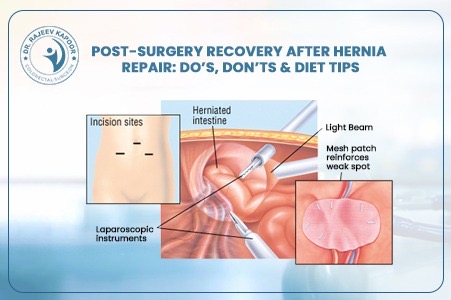
Post-Surgery Recovery After Hernia Repair: Do’s, Don’ts & Diet Tips

Modern hernia surgery is safe, effective, and minimally invasive — but recovery plays a crucial role in ensuring long-term success. Following the right post-operative care routine can help you heal faster, prevent recurrence, and return to your normal life within days. “Recovery from hernia surgery is not about rest alone — it’s about smart movement, good nutrition, and consistent follow-up,” says Dr. Rajeev Kapoor, senior gastrointestinal and laparoscopic surgeon in Chandigarh. 1️⃣ The First 24 Hours: What to Expect After laparoscopic or open hernia repair, patients typically spend a few hours in recovery. Mild discomfort, tightness, or swelling near the incision is normal. You’ll be encouraged to walk within 4–6 hours to improve circulation and prevent blood clots. Light food and fluids can be resumed the same day unless otherwise advised. “Early mobilization helps the body heal faster and prevents complications like constipation or lung infection,” explains Dr. Kapoor. 2️⃣ Do’s After Hernia Surgery ✅ Follow your surgeon’s instructions: Take prescribed antibiotics and painkillers on time. ✅ Stay active but gentle: Short walks 2–3 times a day help recovery. ✅ Support your incision: Use your hand or a small pillow while coughing or sneezing. ✅ Keep the wound clean and dry: Change dressings as advised. ✅ Eat a fiber-rich diet: Prevents constipation and straining. ✅ Stay hydrated: At least 2–3 liters of water daily. ✅ Attend all follow-up appointments: Helps monitor healing and mesh integration. 3️⃣ Don’ts After Hernia Surgery 🚫 Don’t lift heavy objects (>5 kg) for at least 4–6 weeks. 🚫 Don’t drive for the first few days until pain-free movement returns. 🚫 Don’t strain during bowel movements — use stool softeners if needed. 🚫 Don’t smoke or drink alcohol — they slow healing and increase infection risk. 🚫 Don’t skip medications or remove dressings prematurely. “Even if you feel fine, pushing yourself too early can strain the surgical site and delay recovery,” advises Dr. Kapoor. 4️⃣ Diet Plan for a Smooth Recovery Meal Type Recommended Foods Why It Helps Breakfast Oats, fruit smoothie, boiled eggs Energy + easy digestion Lunch Dal, rice, soft vegetables, curd Balanced nutrients, light on stomach Dinner Soups, khichdi, grilled fish/chicken Protein for tissue healing Snacks Coconut water, fruits, nuts Maintains hydration and immunity Avoid Fried foods, spicy curries, carbonated drinks Can cause bloating & discomfort “Nutrition is your body’s repair kit — protein, fiber, and fluids are the building blocks of healing,” says Dr. Kapoor. 5️⃣ When to Contact Your Doctor Seek medical attention if you experience: Persistent fever (>101°F) Redness, pus, or foul discharge from the incision Severe pain or swelling Vomiting, constipation, or inability to pass gas Reappearance of bulge or hardness at the surgical site “Early reporting of warning signs ensures quick correction and prevents major complications,” notes Dr. Kapoor. 6️⃣ Returning to Normal Life Office work: Usually within 3–5 days (for laparoscopic repair) Exercise: Light stretching after 2 weeks; no weightlifting for 6 weeks Travel: Safe after 1 week, depending on comfort Sexual activity: Generally after 2–3 weeks, with doctor’s clearance Conclusion Recovering from hernia surgery doesn’t have to be stressful. With proper care, good diet, and adherence to medical advice, most patients resume normal life within a few days — free from pain and discomfort. For advanced laparoscopic hernia repair and personalized recovery care, consult Dr. Rajeev Kapoor, one of Chandigarh’s most trusted specialists in gastrointestinal and minimally invasive surgery.

Treatment of Ventral Hernia
Hernia

Advancements in the Treatment of Ventral Hernia: Exploring the Latest Techniques

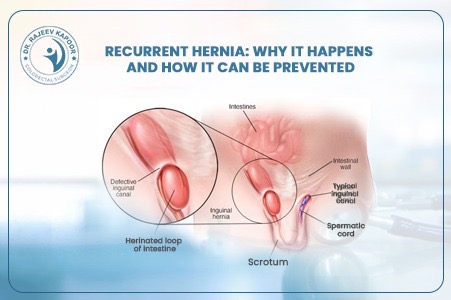
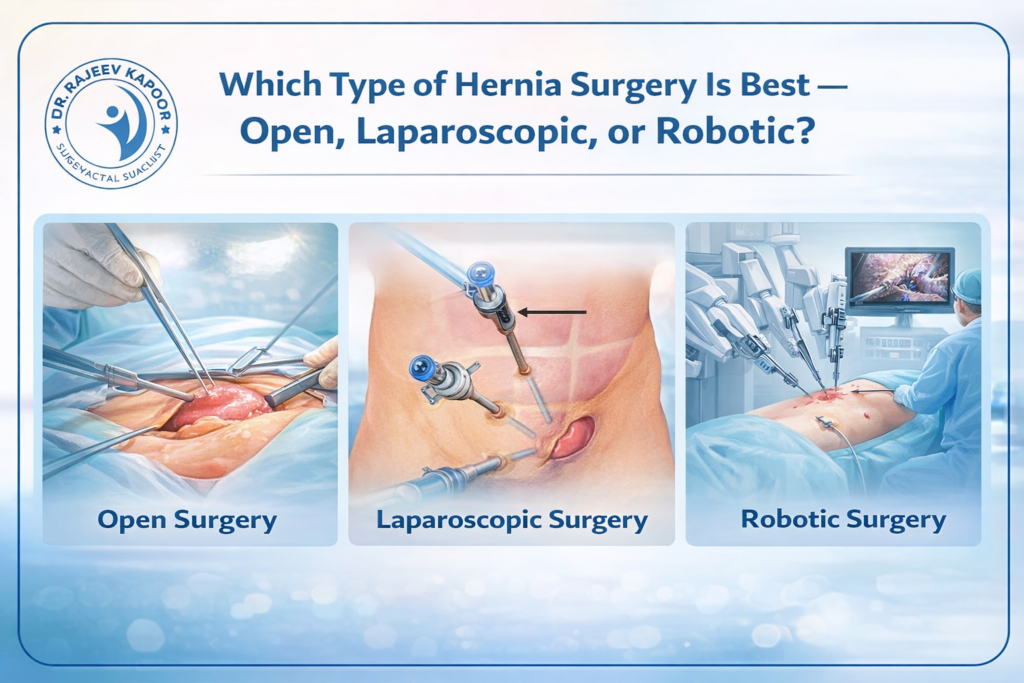
Advancements In The Treatment of Ventral Hernia Ventral hernias are a common condition characterized by a protrusion of abdominal tissues or organs through a weakened area in the abdominal wall. They include epigastric and supraumbilical hernias. They can cause discomfort, pain, and potential complications if left untreated. Over the years, medical science has witnessed significant advancements in the treatment of ventral hernias, offering patients innovative techniques and improved outcomes. In this writeup, I will explore the latest treatment options for ventral hernias, highlighting the advancements that have revolutionized patient care. What are Ventral Hernias Before delving into the latest treatment options, it is important to have a basic understanding of ventral hernias. Ventral hernias occur when there is a weakness or defect in the abdominal wall, allowing tissues or organs to protrude. Common causes include previous surgical incisions, abdominal trauma, obesity, pregnancy, or conditions that increase intra-abdominal pressure. Ventral hernias can be categorized into different types, such as umbilical, incisional, and epigastric hernias. Mesh Repair Techniques for Repair of Ventral Hernia: Mesh repair techniques have revolutionized the treatment of ventral hernias and are widely considered the gold standard. In recent years, advancements in mesh materials, fixation methods, and surgical approaches have significantly improved outcomes. Surgeons now have access to a variety of mesh options, including synthetic and biologic meshes, which provide strength, support, and encourage tissue ingrowth to reinforce the weakened abdominal wall. These meshes can be placed laparoscopically or through open surgery, depending on the individual case. Laparoscopic Ventral Hernia Repair: Laparoscopic ventral hernia repair is a minimally invasive technique that offers numerous advantages over traditional open surgery. It involves making several small incisions through which a laparoscope and specialized instruments are inserted. The hernia defect is then repaired using a special mesh, which is placed on the abdominal wall from the inside. Laparoscopic repair offers benefits such as reduced postoperative pain, shorter hospital stays, faster recovery, as well as improved cosmetic outcomes. Robotic-Assisted Ventral Hernia Repair: Robotic-assisted surgery has gained popularity in the field of ventral hernia repair. The robotic system provides surgeons with enhanced precision, dexterity, as well as visualization, allowing for complex repairs with minimal invasiveness. Robotic-assisted surgery can be particularly beneficial in cases involving large or recurrent hernias, as it offers improved access to the surgical site as well as facilitates precise placement of the mesh. While robotic-assisted repair has shown promising outcomes, it is still considered a relatively new technique and may not be widely available in all healthcare settings. Enhanced Recovery After Surgery (ERAS) Protocols: The implementation of Enhanced Recovery After Surgery (ERAS) protocols has revolutionized postoperative care for ventral hernia patients. These protocols involve a multidisciplinary approach that optimizes patient outcomes as well as expedites recovery. Key components of ERAS protocols include preoperative counselling, optimized pain management strategies, early mobilization, and a focus on nutrition and hydration. By minimizing complications, reducing hospital stays, as well as improving patient satisfaction, ERAS protocols have become an integral part of modern ventral hernia treatment. Biologic Meshes and Tissue Engineering for Ventral Hernia: Biologic meshes as well as tissue engineering techniques represent exciting areas of research and innovation in ventral hernia repair. Moreover Biologic meshes are derived from human or animal tissues and offer a more natural approach to hernia repair. These meshes promote tissue integration and re-modelling, potentially reducing the risk of infection as well as improving long-term outcomes. Additionally, tissue engineering approaches aim to create bioengineered tissues as well as scaffolds to replace or augment damaged abdominal wall tissues, providing a regenerative solution for a good repair and better outcomes Dr. Rajeev Kapoor specializes in Ventral Hernia repair. Book your appointment for consultation. Call at +91-9876-507-444 to get the best treatment for Ventral Hernia. See Also: Umbilical Hernia: To operate or not Know everything about groin hernia

Scroll to Top
Call Now Button