Sarcoma

soft tissue sarcoma
Sarcoma, blog, Cancer

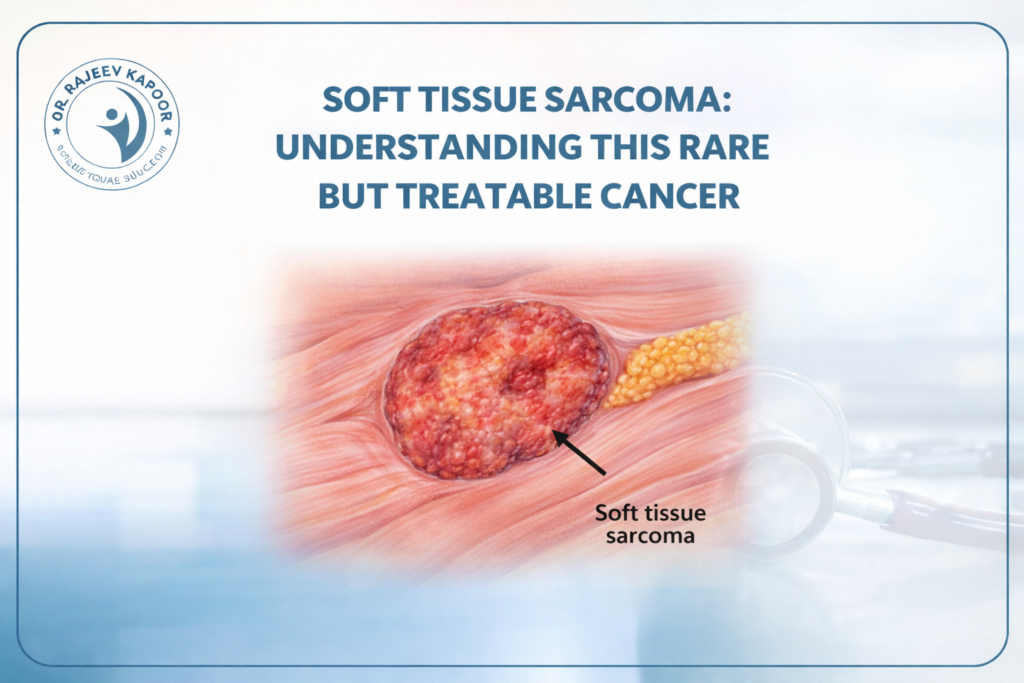
Soft Tissue Sarcoma: Understanding This Rare but Treatable Cancer

Soft tissue sarcoma (STS) is a rare group of cancers that arise from the body’s connective tissues—muscles, fat, nerves, and blood vessels. Though uncommon, these tumors can occur anywhere in the body and often remain silent until they reach an advanced stage. “Sarcomas are challenging because they can grow quietly for months. But with today’s imaging and surgical advances, early intervention leads to excellent results,” explains Dr. Rajeev Kapoor, senior cancer and gastrointestinal surgeon based in Chandigarh. 1️⃣ What Is Soft Tissue Sarcoma? Soft tissue sarcomas comprise over 70 different subtypes, including liposarcoma, leiomyosarcoma, synovial sarcoma, and angiosarcoma. They account for only about 1 % of adult cancers yet can occur at any age. These tumors develop from cells that form structural tissues of the body — making them capable of appearing in the limbs, abdomen, chest, or head-and-neck region. 2️⃣ Key Symptoms You Should Watch For A painless, enlarging lump anywhere in the body Deep-seated swelling or mass > 5 cm that persists Unexplained pain or pressure when the tumor presses against nerves Reduced mobility if located near joints or muscles Unexplained weight loss or fatigue in later stages “Any lump that grows steadily or returns after removal must never be ignored,” warns Dr. Kapoor. 3️⃣ Diagnosis and Imaging Techniques A precise diagnosis requires a multidisciplinary approach: MRI Scan: Determines tumor size and relation to surrounding structures CT Scan: Assesses spread to lungs or other organs Core-Needle Biopsy: Essential for histopathological confirmation PET-CT: Evaluates metastatic disease and treatment planning Dr. Kapoor stresses the importance of getting biopsies performed only by trained oncological surgeons, as improper procedures can complicate later surgeries. 4️⃣ Treatment Options Modern treatment for soft tissue sarcoma is both effective and customized: a. Surgery – Cornerstone of Treatment Wide local excision removing tumor with clear margins Limb-sparing techniques preserve function without amputation b. Radiation Therapy Given before or after surgery to reduce recurrence risk Image-guided and intensity-modulated radiation (IMRT) minimizes damage to normal tissue c. Chemotherapy and Targeted Therapy Drugs like Doxorubicin and Ifosfamide for aggressive subtypes Targeted molecules and immunotherapy agents are showing remarkable promise in advanced cases “Our goal is to combine oncologic safety with functional preservation. With modern techniques, we can save limbs and lives,” adds Dr. Kapoor. 5️⃣ Survival and Prognosis When detected early and managed by a specialized team, soft tissue sarcoma can be successfully treated. The overall 5-year survival rate ranges between 65–80 %, depending on the tumor stage and type. Regular follow-up is crucial to monitor for recurrence or metastasis. 6️⃣ Early Detection and Awareness in India In India, sarcomas are often diagnosed late due to lack of awareness and misdiagnosis as benign lumps. Public education and early screening efforts — especially through campaigns like Sarcoma Awareness Month (July) — can significantly improve outcomes. Conclusion Soft tissue sarcoma may be rare, but it is not untreatable. Advances in diagnostics, precision surgery, and targeted therapies have dramatically improved prognosis. If you notice a persistent or unusual lump, consult a specialist without delay. Dr. Rajeev Kapoor, a trusted cancer and gastrointestinal surgeon in Chandigarh, leads a multidisciplinary team offering comprehensive care for sarcoma and other complex cancers.
Sarcoma Surgery in Mohali
Sarcoma, blog

Life After Sarcoma Surgery: Rehabilitation & Survival in the Tricity

For many patients, sarcoma surgery is a turning point — the moment when hope overcomes fear. But recovery doesn’t end in the operating room. The true journey continues with rehabilitation, emotional healing, and long-term follow-up. In the Tricity region (Chandigarh, Mohali, Panchkula), patients benefit from advanced rehabilitation services, physiotherapy programs, and supportive care teams that help them rebuild strength, confidence, and quality of life after surgery. 🩺 Post-Surgery Rehabilitation: Regaining Strength & Mobility Sarcoma Surgery in Chandigarh may involve removal of large portions of tissue, bones, or muscles. Rehabilitation helps patients adjust and recover. Physiotherapy – Strengthens muscles, restores mobility, and improves balance. Reconstructive Surgery / Prosthetics – Helps restore appearance and function if major tissues or limbs are affected. Pain Management – Essential for physical recovery and emotional comfort. 💡 With consistent rehab, most patients regain independence and return to their daily activities.  Long-Term Follow-Up: Staying Ahead of Recurrence Sarcoma patients need structured surveillance: Regular Check-Ups – Every 3–6 months initially, then annually. Imaging Tests – MRI/CT scans to check for local recurrence. Lung Scans – Since sarcomas often spread to the lungs, chest X-rays or CT scans are a must. 👉 Early detection of recurrence allows quick intervention and better outcomes. Emotional & Social Healing Cancer treatment affects not only the body but also the mind. Patients often struggle with anxiety, body-image issues, or fear of recurrence. Counseling & Support Groups – Provide emotional resilience and community. Family Support – Loved ones play a huge role in recovery motivation. Survivor Stories – Inspire patients to embrace life again with confidence. Example: Many survivors worldwide share how they returned to studies, work, and sports after long rehab programs — proving sarcoma recovery is not just possible, but empowering. Rehabilitation Options in the Tricity Fortis Hospital, Mohali – Comprehensive post-cancer rehabilitation and physiotherapy programs by Dr. Rajeev Kapoor, Sarcoma Surgery Specialist. Specialized Oncology Clinics in Chandigarh – Offering prosthetic fitting, reconstructive surgery, and counseling. Community Programs – Support groups and awareness drives for long-term cancer survivors. Key Takeaway Life after sarcoma surgery may bring challenges, but with the right rehabilitation, follow-up care, and emotional support, patients can lead active, fulfilling lives. The Tricity region stands out as a strong hub for post-cancer care, ensuring that every patient not only survives but thrives.

Sarcoma Surgery in Mohali and Chandigarh
Sarcoma, blog

Early Detection Saves Lives: Recognizing Sarcoma Warning Signs

Sarcoma is known as the “silent cancer” because in its early stages, it often causes no pain and may appear as just a small lump under the skin. Unfortunately, this leads many people to delay seeking medical advice, which can allow the tumor to grow or spread. The good news is: early detection of sarcoma greatly improves survival rates. In Punjab, with advanced cancer facilities in Chandigarh and Mohali, patients have access to timely diagnostics, imaging, and expert oncologists who can act before the disease progresses. ⚠️ Common Warning Signs of Sarcoma While not every lump or swelling is cancerous, you should never ignore these persistent symptoms: Painless Lump: A firm, enlarging lump anywhere in the body (especially in arms, legs, or torso). Swelling or Stiffness: Localized swelling that doesn’t subside over weeks. Deep Pain or Tenderness: Pain in bones or muscles, particularly at night. Restricted Movement: Tumors near joints may cause stiffness or difficulty moving. Abdominal Symptoms: If sarcoma occurs deep in the abdomen, it may cause bloating, discomfort, or digestive issues. 💡 Key Tip: Any lump that persists beyond 4 weeks or continues to grow should be examined by a doctor immediately. 🧪 Why Early Diagnosis Matters Better Treatment Options: Small tumors can often be removed with minimal surgery. Improved Survival Rates: Early-stage sarcomas have a much higher chance of cure. Reduced Complications: Timely treatment avoids complex surgeries and limb amputations. Lower Recurrence Risk: Combining early surgery with additional therapies helps prevent relapse. “Most sarcomas can be successfully treated if they are caught early. Awareness and vigilance are the first steps toward saving lives.” – Dr. Rajeev Kapoor 🏥 Access to Diagnosis in Punjab, India Patients in Punjab can access advanced diagnostic facilities in the Tricity region: Fortis Hospital, Mohali – Provides MRI, CT scans, and biopsy services for tumor evaluation, supporting advanced Sarcoma Surgery treatment in Chandigarh. Homi Bhabha Cancer Hospital, New Chandigarh – A government-supported center offering world-class cancer diagnostics and care. Specialist Surgical Clinics in Chandigarh – Enable faster consultations and referrals to oncology units.You can read in detail here: Multidisciplinary Care for Sarcoma Patients in Chandigarh & Mohali 👨‍👩‍👧 Practical Advice for Patients & Families Don’t ignore painless lumps — consult a doctor if they persist. Ask specifically for MRI or biopsy if the swelling is unexplained. Keep track of symptoms (size, duration, changes) before seeing a doctor. Always get a second opinion at a specialized cancer center if sarcoma is suspected. ✅ Key Takeaway Sarcoma Surgery in Mohali may be rare, but awareness can save lives. In Punjab, early detection combined with modern treatment facilities in Chandigarh, Panchkula and Mohali ensures that patients receive the best possible outcomes. If you or your loved one notice suspicious lumps or persistent swelling, don’t delay. Early action is the difference between complex treatment and a simple cure.

Sarcoma Surgery Mohali and Chandigarh
Sarcoma, blog

Multidisciplinary Care for Sarcoma Patients in Chandigarh & Mohali

Sarcoma treatment is rarely a one-doctor effort. Because of its complexity and rarity, sarcoma requires collaboration between multiple specialists — from surgeons and oncologists to radiologists and rehabilitation experts. This approach, known as multidisciplinary care (MDT), ensures that every aspect of a patient’s journey is addressed with precision and compassion. In leading hospitals across Chandigarh and Mohali for Sarcoma Surgery, multidisciplinary tumor boards are standard practice, giving patients the best chance at long-term survival and a better quality of life. 👩‍⚕️ Who Makes Up the Multidisciplinary Team? A comprehensive sarcoma team includes: Surgical Oncologist – Removes the tumor safely with clear margins. Medical Oncologist – Provides chemotherapy or targeted therapy. Radiation Oncologist – Delivers high-precision radiation to shrink or control tumors. Radiologist – Specializes in imaging for accurate diagnosis and staging. Pathologist – Examines biopsy tissue to confirm tumor type. Rehabilitation Specialist – Focuses on physiotherapy and functional recovery. Psychological Support Experts – Help patients and families cope emotionally. 💡 Together, this team builds a personalized treatment plan tailored to each patient’s tumor type, stage, and health condition. 🏥 Chandigarh & Mohali: Hubs of Advanced Cancer Care Fortis Hospital, Mohali – Offers specialized sarcoma units with access to surgical oncology, medical oncology, and rehabilitation under one roof, led by Dr. Rajeev Kapoor, a renowned cancer and Sarcoma Surgery Specialist. Homi Bhabha Cancer Hospital & Research Centre, New Chandigarh – Equipped with robotic-assisted cancer surgery, ensuring precise tumor removal with faster recovery times. Private Surgical Clinics in Chandigarh – Provide personalized sarcoma consultations and follow-ups. 🔄 Why Multidisciplinary Care Matters Comprehensive Planning: Every case is reviewed by multiple experts before treatment begins. Reduced Recurrence: Combining surgery with chemotherapy or radiation lowers the risk of relapse. Better Outcomes: Preserves mobility, function, and overall quality of life. Patient Confidence: Families feel reassured when several experts collaborate on one plan. “Our collaborative model ensures patients benefit from the expertise of many specialists — leading to precise surgery, effective therapies, and smoother recovery.” – Oncology Thought Leader 🩺 A Patient’s Journey in an MDT Setup Step 1: Imaging and biopsy reviewed jointly. Step 2: Tumor board discusses the best approach (surgery first vs. chemo/radiation first). Step 3: Surgery performed with a clear plan for post-operative therapy. Step 4: Rehabilitation and follow-up included from day one. ✅ Key Takeaway Sarcoma is rare, but hope is real when specialists come together. Chandigarh and Mohali offer cutting-edge infrastructure, robotic technologies, and expert teams dedicated to helping sarcoma patients live longer, fuller lives. With advanced facilities for Sarcoma Surgery in Mohali, patients receive world-class care supported by multidisciplinary expertise. If you’re searching for the right place for treatment, look for hospitals with an active multidisciplinary tumor board — it makes all the difference.

Sarcoma Surgery in Chandigarh
Sarcoma, blog

Sarcoma Surgery: Diagnosis, Treatment & Recovery

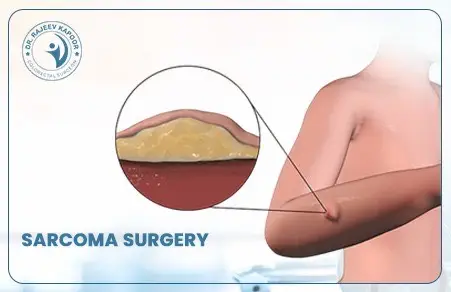
Sarcomas are rare but serious cancers that develop in the body’s connective tissues — such as muscles, fat, nerves, blood vessels, or bones. Because they often begin as painless lumps, sarcomas can be difficult to detect early. However, with the right medical expertise and timely intervention, sarcoma surgery offers patients the best chance for cure and long-term survival. Sarcoma surgery in Chandigarh and Mohali, advanced cancer centers led by experienced surgical oncologists like Dr. Rajeev Kapoor provide world-class care, combining accurate diagnosis, precise surgery, and holistic post-treatment recovery. What Exactly is a Sarcoma? Sarcoma is not a single disease — it’s a group of cancers. Soft Tissue Sarcoma (STS): Begins in muscles, fat, nerves, or blood vessels. Bone Sarcoma: Develops in the skeletal system (e.g., osteosarcoma, chondrosarcoma). Common Subtypes: Liposarcoma, leiomyosarcoma, synovial sarcoma, rhabdomyosarcoma. Though rare, these cancers require specialized oncologists because their treatment is very different from more common cancers. How is Sarcoma Diagnosed? A correct diagnosis is the foundation of successful treatment. The process usually includes: Imaging Tests MRI (most useful for soft tissue tumors) CT or PET scans (to check for spread to lungs or other organs) Biopsy A small tissue sample (core needle or incisional biopsy) confirms the diagnosis. Staging Determines the size of the tumor, its depth, and whether it has spread.  Early diagnosis greatly improves outcomes. Patients are advised not to ignore painless lumps that keep growing. Surgical Treatment for Sarcoma Surgery is the mainstay of treatment for most sarcomas. The goal is simple yet critical: remove the tumor completely while preserving as much normal function as possible. Wide Local Excision: Removes the tumor with a margin of healthy tissue. Limb-Sparing Surgery: Whenever possible, surgeons avoid amputation and use reconstruction to save the arm or leg. Reconstructive Surgery: Plastic or orthopedic procedures restore appearance and mobility. Amputation: Reserved for advanced cases where limb preservation is not feasible. “Surgery remains the cornerstone of sarcoma management. With careful planning, we can remove the tumor effectively while helping patients return to normal life.” – Dr. Rajeev Kapoor Recovery & Post-Surgery Care Rehabilitation: Physiotherapy helps restore strength and mobility. Adjuvant Treatments: Some patients may need chemotherapy or radiation after surgery to reduce recurrence risk. Follow-Up: Regular check-ups (often every 3–6 months) are vital to detect recurrence or spread at the earliest. Key Takeaway Sarcoma surgery in Mohali and Chandigarh requires both medical precision and multidisciplinary support. Chandigarh and Mohali are emerging as trusted hubs for sarcoma treatment, with access to advanced diagnostics, expert surgeons, and rehabilitation facilities. If you or your loved one is facing sarcoma, remember: early diagnosis, timely surgery, and expert care can make all the difference.

Scroll to Top
Call Now Button