
Emergency Surgery
Chandigarh · Mohali · Tricity
When a surgical crisis strikes — day or night — Dr. Rajeev Kapoor is available. Fully trained in colorectal, cancer and trauma surgery, available around the clock.
If you or someone else is in a surgical emergency — do not wait.
Severe sudden abdominal pain · Abdomen rigid as a board · Vomiting with no bowel movements · Rectal bleeding · Stab or gunshot wound · Signs of shock (cold sweat, fainting, rapid pulse) — these require immediate attention. Proceed to your nearest hospital Accident & Emergency department without delay.
What Is Emergency Abdominal Surgery?
Emergency surgery is an unplanned operation that must be performed urgently — usually within hours — because a condition is life-threatening or will rapidly worsen without immediate surgical action.
Unlike planned (elective) surgery — where you have time to prepare, discuss, and schedule your operation — emergency surgery happens when there is no safe option to delay. The inside of the abdomen has burst, something has blocked off completely, bleeding is uncontrolled, or infection is spreading fast.
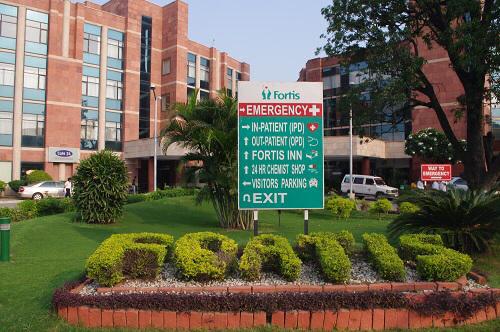
This page has been compiled by Dr. Rajeev Kapoor, MS, Colorectal Fellowship (Australia) — a surgeon with over 35 years of experience, with specialist training in colorectal surgery, surgical oncology, and trauma & emergency surgery. He practises at Fortis Hospital, Mohali.

When Is Emergency Surgery Needed?
Some conditions can wait a few days for a planned operation. Others cannot. The following warning signs mean you should go to hospital immediately — do not take painkillers and wait to see if it settles.
🔴 Go to A&E Now
- Sudden severe abdominal pain — especially if it came on in seconds
- Abdomen hard and rigid to touch
- Cannot pass stool or gas for many hours
- Heavy rectal or upper GI bleeding
- Stab wound, gunshot wound, or blunt abdominal trauma
- Testicle suddenly painful and swollen (possible torsion)
- Signs of shock — cold sweat, dizziness, rapid weak pulse
🟠 Seek Urgent Advice
- Hernia that cannot be pushed back in and is painful
- Pain at the site of an old scar or previous hernia
- Fever with worsening abdominal pain
- Painful lump or swelling near the anus or groin
- Swollen, hot, red area of skin spreading rapidly
- New severe pain around a stoma
- Inability to swallow with severe chest/throat pain
ℹ️ What Happens After You Arrive
- Assessment by A&E team immediately on arrival
- Blood tests, ECG, imaging (X-ray, ultrasound, CT scan) done urgently
- Surgical review by the on-call surgical team within minutes
- Emergency operation arranged as soon as safely possible
- ICU / HDU care arranged if required post-operatively
📍 What to Do
Go immediately to the Accident & Emergency department of your nearest hospital. Do not drive yourself if you are in severe pain — ask a family member or call an ambulance.
Emergency Conditions Treated
The following is a comprehensive list of emergency surgical conditions treated.
Acute Abdominal Emergencies
Appendicitis
Inflammation of the appendix causing right lower abdominal pain, nausea and fever. Without surgery the appendix can burst — causing life-threatening peritonitis. Treated with emergency appendicectomy (keyhole where possible).
Intestinal / Bowel Obstruction
A blockage anywhere along the small or large bowel prevents passage of stool and gas. Causes include adhesions from previous surgery, hernias, cancer, and volvulus. Severe obstruction requires emergency surgery to relieve the blockage and restore gut continuity.
Perforated Bowel
A hole in the wall of the stomach, small bowel, or colon allows gut contents to leak into the abdomen, causing peritonitis — a surgical emergency. Causes include perforated peptic ulcer, perforated diverticular disease, and perforated cancer. Immediate surgery is essential.
Gastrointestinal (GI) Bleeding
Serious bleeding from the upper GI tract (stomach, duodenum) or lower GI tract (colon, rectum) that does not stop with non-surgical treatment. Emergency surgery controls the source of bleeding and can be life-saving. Includes post-operative bleeding complications.
Obstructed / Strangulated Hernia
When a hernia traps bowel that can no longer be pushed back, or when the blood supply to the trapped bowel is cut off (strangulation), emergency repair is needed urgently. Strangulated hernia can lead to gangrene of the bowel within hours.
Acute Diverticulitis & Perforation
Infection and inflammation of small pouches (diverticula) in the colon. Severe cases can perforate, form abscesses, or cause peritonitis requiring emergency surgery. Hartmann's procedure or primary resection may be performed depending on the clinical situation.
Emergency Stoma Formation
When the bowel needs to be diverted urgently — due to obstruction, perforation, or sepsis — an emergency colostomy or ileostomy may be formed to protect the patient while healing occurs. Stoma reversal can be planned later once recovery is complete.
Mesenteric Ischaemia
Loss of blood supply to a segment of bowel — a rare but critical emergency. Requires immediate recognition, imaging, and surgery to remove affected bowel and restore circulation. Time is critical: delayed surgery significantly worsens outcomes.
Abscess, Skin & Soft Tissue Emergencies
Perianal & Anorectal Abscess
A painful collection of pus around the back passage. Left untreated, the infection can track through tissue planes and become life-threatening. Emergency incision and drainage provides immediate relief. Some perianal abscesses are the first sign of an anal fistula, which may need planned surgery later.
Abscess — Any Site
Abscesses (collections of pus) anywhere in the body — groin, axilla, breast, back, limb, abdominal wall — require surgical drainage. Under local or general anaesthetic, the abscess is incised and drained, providing rapid relief and preventing the infection from spreading further.
Necrotising Fasciitis (Flesh-Eating Infection)
A rapidly spreading, life-threatening deep soft tissue infection that destroys skin, fat and muscle. Requires emergency wide surgical debridement — often repeated procedures — to remove all infected tissue. Prompt recognition and aggressive surgery are essential to save life and limb.
Severe Cellulitis & Wound Debridement
Spreading skin and soft tissue infections that have not responded to antibiotics, or are associated with underlying dead tissue, require surgical debridement — removal of infected and non-viable tissue to allow healing. Skin grafting may be needed as a second stage.
Pilonidal Abscess
An acute infected cyst or abscess in the cleft between the buttocks (pilonidal sinus). Emergency drainage relieves the acute episode; definitive surgery to remove the sinus tract can be planned electively once infection has settled.
Urological Emergencies
Torsion of the Testis
The testis twists on its own blood supply — causing sudden severe scrotal pain and swelling. This is a time-critical emergency: the testis must be surgically untwisted and fixed (orchidopexy) within 4–6 hours to preserve it. Delay leads to loss of the testis. If you have sudden severe scrotal pain, go to hospital immediately.
Phimosis (Acute / Paraphimosis)
Paraphimosis — where the foreskin becomes trapped and cannot be reduced — is a genuine urological emergency causing pain and swelling. Emergency dorsal slit or circumcision is performed to relieve the constriction. Planned circumcision for recurrent phimosis can be arranged as an elective procedure.
Fournier's Gangrene
A rare but severe form of necrotising fasciitis affecting the genitalia and perineum. Requires immediate wide debridement, antibiotics, and ICU support. Speed of intervention is the single most important factor in survival.
Trauma Surgery
Trained in Penetrating & Blunt Abdominal Trauma
Dr. Rajeev Kapoor is a trained trauma and emergency surgeon, with hands-on experience across the full spectrum of general surgical emergencies — from acute abdominal conditions to penetrating injuries. All forms of abdominal and general surgical trauma are managed, including firearm (gunshot) injuries, stab wounds, and blunt abdominal trauma from road accidents or falls. The hospital has a full trauma team, 24-hour OT availability, blood bank, and ICU.
Firearm (Gunshot) Injuries
Gunshot wounds to the abdomen require immediate surgical exploration to identify and repair injuries to bowel, solid organs, major vessels, and other structures. Management follows Advanced Trauma Life Support (ATLS) principles, with the full trauma team working together.
Stab Wounds
Penetrating stab wounds to the abdomen, flank, or back may injure bowel, liver, spleen, kidneys, or major blood vessels. Surgical exploration — often via laparotomy — is required to assess and repair damage. Laparoscopic assessment may be appropriate in stable patients.
Blunt Abdominal Trauma
Road traffic accidents, falls, and sports injuries can cause internal organ damage — rupture of the spleen, liver lacerations, or bowel perforations — without any external wound. Urgent imaging and surgical review determine whether emergency operation is required.
Other Emergency Procedures
Emergency Laparotomy (Exploratory Surgery)
When the cause of severe abdominal illness cannot be determined despite imaging, or when the patient is deteriorating rapidly, an emergency laparotomy — opening the abdomen to directly inspect all organs — may be required to find and fix the problem.
Acute Cholecystitis / Gallbladder Emergency
Severe gallbladder infection or a gallstone blocking the bile duct can escalate to cholangitis (bile duct infection) or pancreatitis. When medical management fails, emergency cholecystectomy or biliary drainage is performed urgently.
Anastomotic Leak & Post-operative Complications
Occasionally, a join made between two pieces of bowel during planned surgery can break down (anastomotic leak), causing peritonitis and sepsis. This requires emergency return to the operating theatre — a complex situation that demands specialist colorectal surgical expertise.
Emergency Surgery vs Planned Surgery
It helps to understand how emergency surgery is different from a planned operation — so that patients and families know what to expect when a crisis occurs.
| Feature | Emergency Surgery | Planned (Elective) Surgery |
|---|---|---|
| Timing | Within hours — cannot be safely delayed | Weeks or months ahead — fully scheduled |
| Preparation time | Minimal — patient stabilised quickly | Weeks — full pre-op assessment, fasting, bowel prep |
| Fasting (nil by mouth) | Treated as full stomach — RSI anaesthesia used | 6–8 hours fasting protocol followed |
| Approach | Often open surgery (laparotomy) for speed and access | Laparoscopic (keyhole) where possible |
| Risk level | Higher — patient may be septic, in shock, or have organ failure | Lower — patient optimised before operation |
| Recovery | ICU may be needed; longer hospital stay | Often day case or short stay |
| Family involvement | Team discusses plan with family urgently | Pre-operative counselling with patient and family well in advance |
| Consent | Informed consent obtained as quickly as safely possible; implied if patient unconscious | Full informed consent signed well before the operation date |
Even in emergency situations, the surgical team will always take a moment to explain what is happening and what is planned — keeping you or your family as informed as possible given the circumstances.
What to Expect at Hospital
Here is what happens from the moment you arrive as an emergency patient at the hospital.
-
Arrival at A&E — Immediate Triage
On arrival at any hospital's Accident & Emergency department, a nurse assesses you within minutes. Vital signs (pulse, blood pressure, oxygen level, temperature) are checked, and a triage category is assigned based on urgency. Critically unwell patients are directed immediately to the resuscitation bay.
-
Urgent Investigations
Blood tests (full count, kidney function, liver function, clotting, group & crossmatch), urine test, ECG, chest X-ray, abdominal X-ray, and CT scan of the abdomen are arranged urgently as needed. Results are available within 30–60 minutes in most cases.
-
Surgical Review
A surgical registrar reviews you immediately and the relevant surgeon is contacted. The diagnosis is explained to you and your family clearly and in plain language before any decision is made about treatment.
-
Resuscitation & Stabilisation
IV fluids, pain relief, antibiotics (when indicated), and blood transfusion (if required) are started. The anaesthetic team assesses your fitness for surgery. In some cases, an interventional radiology procedure (e.g. drainage of an abscess under CT or ultrasound guidance) may avoid or defer surgery.
-
Informed Consent
The operation, its benefits, risks, and alternatives are explained to you (and your family where appropriate). You are asked to sign a consent form. In life-threatening emergencies where the patient cannot consent, treatment proceeds under the doctrine of implied consent and best-interests principles — as per Indian medical law.
-
Emergency Operation
You are taken to the operation theatre as soon as safely possible — sometimes within 30 minutes of arrival for the most critical cases. The anaesthetic team puts you to sleep and the surgeon performs the operation. In most abdominal emergencies, the incision is a midline laparotomy (open surgery down the centre of the abdomen), though laparoscopy is used where appropriate.
-
Post-operative Recovery & ICU
After surgery you recover in the post-anaesthetic care unit (PACU), then move to the ward or ICU depending on your clinical status. The surgical team monitors you closely with daily ward rounds. The average hospital stay after emergency surgery ranges from 3 to 10 days depending on the condition treated and your overall health.
-
Follow-up & Ongoing Care
Before discharge, a clear written plan for your recovery is given — including wound care, diet, activity, and medications. A follow-up outpatient appointment is arranged, usually 1–2 weeks after discharge. If further planned surgery is needed (for example, reversal of an emergency stoma), this is discussed and scheduled at your follow-up visit.
Frequently Asked Questions
Common questions about emergency surgery.
Emergency abdominal surgery is an unplanned operation that cannot be safely delayed — usually performed within hours of the patient arriving in hospital. It is required when a condition such as appendicitis, a perforated bowel, intestinal obstruction, or severe GI bleeding threatens life or is rapidly worsening. Unlike elective surgery, there is no time for extended preparation — the team works quickly to stabilise the patient and correct the problem surgically.
Yes. Dr. Rajeev Kapoor is available for emergency surgical cases at all hours. The hospital where he practises has 24-hour operation theatres, ICU, blood bank, and imaging services.
In planned surgery, you and your surgeon have time to discuss the operation in detail, prepare for it, and complete pre-operative checks over several weeks. In emergency surgery, the decision and operation happen within hours. The patient may be unwell — in pain, septic, or in shock — which makes both the surgery and recovery more complex. Emergency surgery is more commonly performed as open surgery (via a laparotomy), whereas planned surgery is often done via keyhole (laparoscopic) technique.
Not always — but sometimes yes. In emergency bowel surgery, when the bowel is inflamed, contaminated, or the patient is too unwell to safely join two ends of bowel together, a temporary stoma (colostomy or ileostomy) may be formed. This diverts the bowel contents into a bag on the abdomen, allowing the bowel to heal. In most cases, the stoma can be reversed in a planned operation 3–6 months later. The surgical team will discuss this with you both before and after surgery.
All forms of trauma are managed including firearm (gunshot) injuries, stab wounds, and blunt abdominal trauma from road accidents. This includes injuries to the bowel, solid organs (liver, spleen), abdominal wall, and pelvic structures. Complex multi-system trauma cases are managed in close collaboration with orthopaedics, urology, and other surgical specialists.
Go immediately to the Accident & Emergency department of your nearest hospital. Do not try to manage severe abdominal pain, rectal bleeding, a rigid abdomen, or suspected torsion of the testis at home — these conditions can deteriorate very rapidly. Time is critical in surgical emergencies. Do not wait for symptoms to settle on their own.
Yes. A perianal abscess is one of the most common surgical emergencies. It causes severe pain and pressure around the back passage. The treatment is surgical incision and drainage — a relatively minor procedure that provides immediate relief. It can be done under local or general anaesthetic. If you have a painful lump near the back passage, do not delay — left untreated, abscesses can spread and become far more serious.
Yes. The hospital has a fully equipped Intensive Care Unit (ICU) and High-Dependency Unit (HDU) for patients who need close monitoring after major emergency surgery. ICU care is arranged as needed in collaboration with the critical care team.
For planned consultations and enquiries: Contact page | drrajeevkapoor.com
