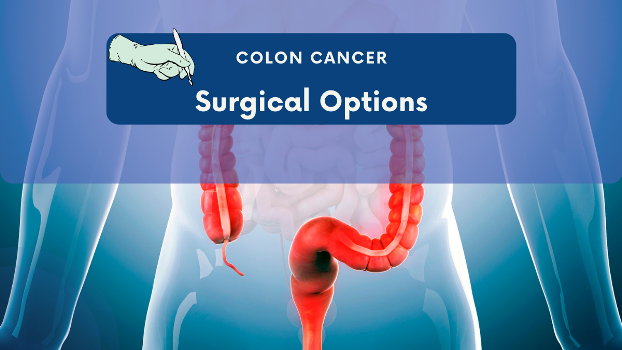
Hemicolectomy

Surgery for colon cancer
Colon Cancer Surgery, Colon. Cancer, Colorectal Cancer

Surgery for colon cancer: Best option for you

Surgical treatment is the most usual treatment for colon cancer and also might range from minimally invasive, such as excising a polyp throughout a colonoscopy, to, in rare instances, getting rid of the whole colon. Many surgeries for colon and rectal cancer  involve getting rid of cancer, the section of the colon in which the cancer was found, surrounding normal tissue as well as close-by lymph nodes. This is the basic principle used for all cancer surgeries of colon and rectum irrespective of whether open or minimally invasive surgical procedure is used. People may get chemotherapy treatment and/or radiation treatment before and/or after surgical procedure for rectal cancer. These adjuvant therapies may help diminish tumours prior to they are surgically gotten rid of and are intended to target cancer cells that may continue to be after surgical treatment. Such a choice will depend on the clinical staging of the cancer   Local excision and polypectomy If colon or rectal polyp or cancer is found at an early stage, it can be removed, with a colonoscope. It is a excision that does not need puncturing the abdominal wall. If the excision includes the removal of a polyp, the treatment is called a polypectomy. This is also used to remove pre malignant lesions and thus need for surgery is avoided. During these procedures, a physician accesses the colon or rectum with a colonoscope as well as a connected cutting tools used to remove the polyps or unusual cells. If a polyp or location of uncommon cells cannot be excised through these treatments, laparoscopic or open surgery may be needed. Colectomy: Total or Hemicolectomy A colectomy is the removal of all or part of the colon. The resection might be carried out as a less intrusive laparoscopic colectomy. If open surgery is needed, a lengthy incision in the abdomen might be required. With open surgery, patients will remain in the hospital for a week or more and might have a longer period of recovery. Early discharge is possible with laparoscopic or open surgery. Laparoscopic surgery for Colon Cancer Colorectal surgeon will carry out a laparoscopic colectomy to get rid of the malignant part of the colon and also neighbouring lymph nodes, and afterwards reattach the healthy ends of the colon. A laparoscopic colectomy may result in less pain, a shorter stay in the health centre and also a speedier recovery. With a laparoscopic colectomy, about 4 to 5 tiny lacerations are made around the abdomen. The medical oncologist after that inserts a laparoscope, a thin tube outfitted with a small video camera that projects photos of the within the abdominal area on a nearby screen. The colorectal surgeon after that inserts tools via these small cuts to do the surgery. Types of Colectomy used for Colon Cancer The type will depend upon the location and extent of the tumour. This will also depend on the number of tumours found in the colon. Based on above these could be: Total Colectomy Subtotal Colectomy Right Hemicolectomy Right Extended Hemicolectomy Left Hemicolectomy High Anterior Resection Sigmoid Colectomy Proctocolectomy Colostomy for colon cancer A colostomy may be needed, relying on the kind as well as degree of the colon surgical treatment carried out. During this procedure, the colon is linked to a hole in the abdomen (called a stoma) to draw away faeces from a damaged or surgically fixed part of the colon or anus. Some colostomies may be reversed as soon as the repaired tissue heals. Various other colostomies are irreversible, as well as the stoma is affixed to a colostomy bag that accumulates waste. These are called permanent colostomies and are used for very low rectal cancer which is near the anus and the sphincters are involved. Proctectomy A proctectomy is used to get rid of all or part of the rectum. A low-anterior resection entails the removal of rectum for cancer located in the top part of the rectum, which is closest to the S-shaped sigmoid colon. Some surrounding healthy rectal tissue may likewise be eliminated, in addition to nearby lymph nodes and also fatty tissue. This surgery involves a joint made with special staplers and the colostomy used is temporary. A pathologist will analyse the lymph nodes to identify if cancer cells are present. This will certainly aid physicians identify the stage of the disease and also whether chemotherapy and or radiotherapy is required. After the cancerous section of the rectum is eliminated, the colorectal oncologist links the sigmoid colon with the remaining healthy part of the rectum below the cancer. This allows waste to pass typically out of the body through the anus, once the temporary stoma is removed. Abdominoperineal resection (APR) is made use of to deal with cancer in the lower rectum. Since this treatment needs removal of the cancerous section of the lower anus nearest the anus, some or every one of the anal sphincter is likewise gotten rid of. The sphincter is a muscle that maintains the anus shut and protects against stool leak. Since the sphincter is in charge of digestive tract control, the colorectal surgeon additionally carries out a colostomy to enable the body to secrete waste. Laparoscopic or Robotic Surgery for rectal cancers All kind of proctectomies in including APR are also done by these procedures. Robotic surgery gives an edge over laparoscopic surgery as it has better magnification and is more precise in limited spaces. However open surgery may be required for larger or fixed tumours of the rectum. HIPEC for Colon Cancer Hyperthermic intraperitoneal radiation treatment (HIPEC) is an extremely focused, warmed chemotherapy therapy that is supplied directly to the abdominal area throughout surgery. Unlike systemic radiation treatment distribution, which distributes throughout the body, HIPEC may supply chemotherapy directly to cancer cells in the abdomen. This allows for higher dosages of chemotherapy therapy. HIPEC might be especially practical for people with colon cancer or rectal tumours that have not involved organs such as the liver or lungs, or to lymph nodes outside

Colectomy Surgery in Chandigarh | Colon Resection Surgery, Treatment
Colorectal Surgery, General Surgery

Colectomy Surgery in Chandigarh | Colon Resection Surgery, Treatment

Colectomy Surgery – What I Need to Know about it Colectomy Surgery in Chandigarh – Colectomy is a surgical procedure used to eliminate a part or all of the large intestine (colon). Your colorectal surgeon may advise a colectomy to deal with inflamed colon triggered by Crohn’s disease or colitis. It can additionally be done to deal with colon cancer as well as severe constipation. There are plenty of other reasons for which partial or complete colectomy is done; let’s find out below. What is the colon? The colon is another name for the big intestine. Some doctor call it the large bowel. The colon appears like a long, winding tube. It covers from right side of your belly to the left, making a square-like form. It extends almost 5 feet in size. It begins where the small intestine (ileum) finishes, and goes across the belly to end at the anus. What is the role of colon: It assists your body digest food. Following are the steps of food movement in the colon: Food goes into the colon from the small intestine. As food moves via the colon, water gradually gets taken in. Not absorbed food waste heads to the rectum as stool. Stool exits the body with the rectum when you poop or faeces or poo Why is a colectomy done? There are various diseases for which this procedure is done. As specified above, the removal of colon could be partial, segmental or complete. Several diseases for which it is done are: Ulcerative colitis Crohn disease Amoebic colitis Ischaemic colitis Colon Cancer Diverticulitis and its complications Vascular malformation causing bleeding Chronic constipation Other infections causing colitis Colonic obstruction called intestinal obstruction Volvulus Intussception Multiple polyps In many cases, colorectal surgeon may advise colectomy surgical procedure as the best method to treat an illness, such as colon cancer. Other times, colectomy is considered as a less-invasive treatment choice, when medicines fail to control the disease. Less commonly, doctors may require to carry out a colectomy to remove a blockage or stop haemorrhaging in your colon. Also See: Colon Cancer Surgeon in Chandigarh What is a total colectomy? Many nomenclatures are used based on the area of the colon gotten rid of through a procedure. During a total colectomy, a colorectal surgeon removes the whole colon. What is a partial colectomy? Partial colectomy describes any kind of colectomy surgical treatment that involves removing one part of the large intestine. Kinds of partial colectomy surgical procedures consist of:. Hemicolectomy: Right or left part of the colon is removed Extended Right Hemicolectomy: Right colon along with a part of left colon is removed. Proctocolectomy: A colorectal surgeon gets rid of some or all of the colon plus the rectum. Sigmoidectomy: This procedure entails removing the bottom area of the colon. This section, the sigmoid colon, is next to the rectum. It’s also called sigmoid colectomy. High Anterior Resection: In this part of sigmoid colon and upper rectum are removed. What is a laparoscopic or Robotic colectomy? Colorectal surgeons perform the abovementioned surgeries by various methods. These are: Open surgery: A specialist makes one or even more long incision to enter the abdomen to remove or repair the colon. Laparoscopic colectomy: A specialist makes numerous tiny incisions. Long, advanced, flexible tools (with a video camera) is inserted inside the tummy via these cuts. The camera presents amplified pictures from inside your body onto a TV monitor by the side of the operating table. The surgeon does the surgery as required. A small incision is used to remove the resected colon. Robotic Colectomy: This is another latest method to do the surgery. It’s done through small incisions and long flexible instruments, but the instruments are help by a robot controlled by the surgeon. Surgeon gets a 3D vies from his console. The procedure remains the same as described in laparoscopic surgery. Also See: Rectal Cancer Surgeon in Chandigarh What’s the distinction in between a colectomy and a colostomy? Not all colectomy surgeries need a colostomy. If your specialist can reconnect both ends of healthy colon cells, no colostomy is required. Many a times, a colostomy is required along with the colectomy and it could be a temporary or a permanent colostomy. What is a colostomy: It involves making an opening (called a stoma) in the abdominal wall surface when the healthy and balanced end of the colon is brought out as a stoma. The waste matter is collected in a plastic bag (called a colostomy bag) covering the stoma. This water-proof bag accumulates waste from the digestive system tract. You will need to empty this bag throughout the day. Is a colostomy irreversible? Not always. Many people just require a colostomy momentarily while their colon heals. During a second operation, your colorectal. surgeon reconnects the colon and also removes the colostomy bag. In specific situations, a colostomy is permanent. How much time is taken for a colectomy? Colectomy surgical treatment may take as low as one hr or longer than 4 hours. Much depends on what the surgical treatment entails, including how much colon needs to be removed. What are the prospective dangers or complications of colectomy? Issues are usually rare. They can occur after any type of surgery. Possible difficulties of colectomy consist of: Blood loss. Infection. Blood clots. Leak from a joint connecting two parts of the colon Injury to neighbouring organs, such as the small intestine or bladder. What can I anticipate after colectomy? Recuperation from colectomy surgery is different for every person. A great deal relies on why one required a colectomy as well as what the treatment entailed. Recuperation might include minor or large modifications in how your body functions. These adjustments may be short-lived (for a short time) or long-term (long-lasting). All these issues will be explained by your surgeon. Key Points about Colectomy * Colectomy or variants are major surgical procedures. * They are mostly safe as well as effective. * laparoscopic/robotic surgery has made post-operative recovery

Colon Cancer: Presentation, Diagnosis and Treatment
Colon. Cancer, Colorectal Cancer

Colon Cancer: Presentation, Diagnosis and Treatment

Colon cancer is a type of cancer that begins in the big intestine (colon). The colon is the last part of the digestion tract starting at cecum on right side and ending at rectum and anal canal. Colon cancer commonly impacts older adults, though it can happen at any kind of age. It usually starts as a tiny polyps that form on the inside of the colon and grows larger. Polyps are benign. Gradually these polyps can become colon cancers. Colon cancer is often called colorectal cancer, which is a term that integrates colon cancer and rectal cancer, which begins in the rectum. Large Intestine Polyps might be tiny as well as multiple, if any type of, signs. For this reason, doctors advise regular screening tests to aid protect against colon cancer cells by identifying as well as getting rid of polyps before they develop into cancer. If colon cancer develops, lots of therapies are readily available to help get rid of it, consisting of surgical treatment, chemotherapy treatment as well as medicine treatments, such as radiation treatment, targeted therapy and immunotherapy. What are the Signs and Symptoms of colon cancer A persistent modification in your bowel practices, consisting of diarrhoea or irregularity or a change in the consistency of your faecesAnal bleeding or blood in your faecesPersistent abdominal painA sensation that your bowel doesn’t empty totallyWeakness or exhaustionInexplicable weight reduction Many individuals with colon cancer experience no symptoms in the beginning of the illness. When symptoms show up, they’ll likely differ, relying on the cancer cells’ size and also location in your large intestinal tract. When to see a medical professional If you see any one of the above symptoms or signs that stress you, make an appointment with your medical professional. How does colon cancer starts Physicians aren’t certain what creates most colon cancers. However, generally, colon cancer begins when healthy and balanced cells in the colon develop modifications (anomalies) in their DNA. A cell’s DNA includes a collection of directions that inform a cell what to do. When a cell’s DNA is harmed and also ends up being cancerous, cells proceed to split– also when brand-new cells aren’t needed. As the cells accumulate, they create a growth. With time, the cancer cells can expand to invade as well as damage typical organs nearby. As well as malignant cells can travel to other parts of the body to develop deposits there (spread). What are the causes or risk factors of colon cancer? Older age. African-American race. A personal history of colon cancer or polyps. Family history of colon cancer Inflammatory digestive tract conditions. Inherited syndromes like familial adenomatous polyposis (FAP) and also Lynch disorder, which is likewise known as hereditary nonpolyposis intestines cancer cells (HNPCC). Low-fiber, high-fat diet. An inactive way of life. Obesity. Diabetes mellitus. Smoking cigarettes. Heavy use of Alcohol. How do we diagnose colon cancer? • Colonoscopy: It uses a long, versatile and also slender tube affixed to a camera and screen to see your whole colon as well as anus. If any questionable areas are discovered, your medical professional can pass medical tools via television to take tissue examples (biopsies) for evaluation and get rid of polyps.• Blood examinations• CEA levels: Tracked gradually, the degree of CEA in your blood may help your medical professional comprehend your prognosis and also whether your cancer is responding to therapy.• CT Scan• PET Scan What is Staging of Colon Cancer? Staging helps establish what therapies are most appropriate for you. The stages of colon cancer are shown by Roman numerals that vary from 0 to IV, with the most curable stages being I to III suggesting cancer that is limited to the lining of the within the colon. By stage IV, the cancer cells has actually spread (metastasized) to other locations of the body and the cure becomes limited. How do we treat Colon Cancer? Treatment depends on the staging of the colon cancer. Type of surgery depends on the location of the colon cancer. Modality of surgery depends on the expertise of the surgeon as well as the stage and extent of the tumour. Therapy for colon cancer generally entails surgical treatment to get rid of the cancer. Various other therapies, such as radiation treatment and chemotherapy, may likewise be advised as required according to the final stage. Surgery for very early-stage colon cancer like polyps If your colon cancer is extremely tiny, your medical professional might advise a minimally invasive method to surgical procedure, such as:• Polypectomy: If your cancer is small, localized, entirely included within a polyp and in a really beginning, your medical professional may be able to remove it totally with colonoscopy.• Endoscopic mucosal resection: Larger polyps might be eliminated during colonoscopy making use of unique devices to remove the polyp and a percentage of the internal lining of the colon in a treatment called an endoscopic mucosal resection. If it is a limited growth in the colon then the options available are: Keyhole surgical procedure (laparoscopic surgical procedure): In this treatment, your doctor does the operation via a number of tiny cuts in your stomach wall, placing instruments with affixed electronic cameras that display your colon on a video clip display. The specialist might likewise take samples from lymph nodes in the location where the cancer is located. Open Surgery: The surgery is done by the open method in which a large incision is used. If the tumour is badly stuck all around or it is very large or invading surrounding structures, then this traditional method is used. The decision depends on the operating colorectal surgeon. Partial colectomy: Throughout this treatment, the surgeon eliminates the part of your colon which contains the cancer, in addition to a margin of regular colon on either side of the cancer cells Your surgeon is often able to reconnect the ends of your colon or rectum. This treatment can frequently be done by a minimally invasive technique (laparoscopy or robotic surgery). Its called right

Scroll to Top
Call Now Button