Robotic Surgery — Precision Beyond the Reach of the Human Hand
A patient guide to understanding how robotic surgery works, what procedures it is used for, and what to expect during your care at Fortis Hospital Mohali.
What Is Robotic Surgery?
Robotic surgery is a form of minimally invasive surgery — meaning it uses small keyhole incisions rather than a large open cut. The surgeon operates from a console, controlling a set of robotic arms that hold the surgical instruments inside the patient's body.
The robot does not operate on its own. Every movement of the instruments is made directly by the surgeon — the robotic system simply translates those movements with greater precision, stability, and range than a human hand alone can achieve.
Think of it like this: the surgeon is a pilot. The robotic system is the aircraft. At no point does the aircraft decide where to go — every action is under the surgeon's full control.
In this way, robotic surgery combines the surgeon's expertise and judgement with technology that enhances what the surgeon's hands can do — especially in tight, confined spaces like the pelvis, which are physically difficult to reach with conventional instruments.
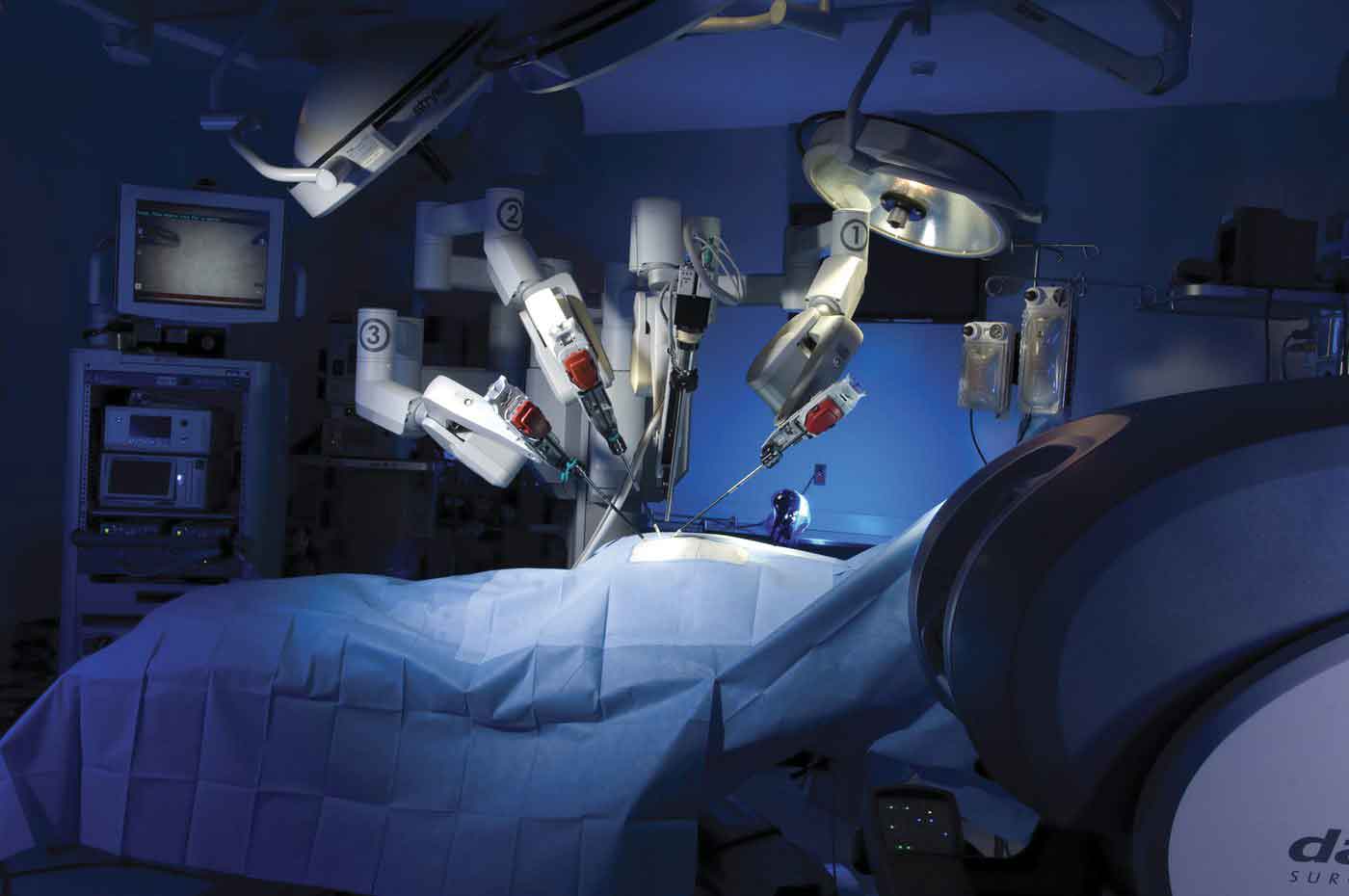
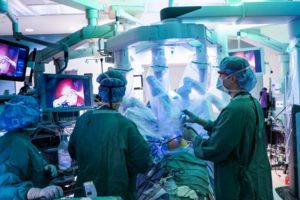
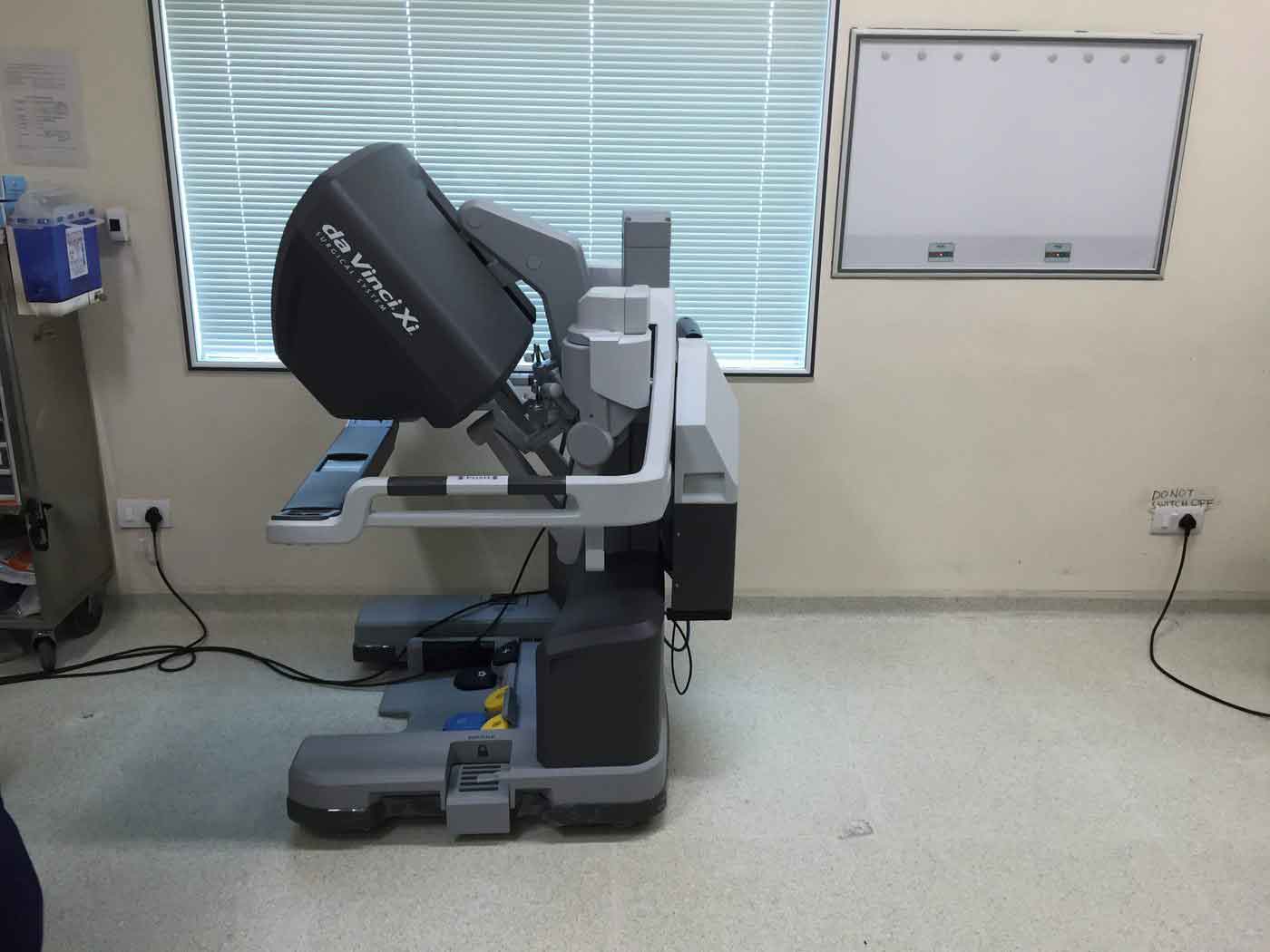
The Da Vinci robotic surgical system in the operating theatre at Fortis Hospital, Mohali.
An important note: Robotic surgery is not suitable for every patient or every procedure. Your surgeon will assess your individual situation — anatomy, medical history, the nature of the disease — and discuss whether a robotic, laparoscopic, or open approach is most appropriate for you. The goal is always the safest and most effective operation for you specifically.
The Da Vinci Surgical System
The Da Vinci system — developed by Intuitive Surgical — is the robotic platform used at Fortis Hospital Mohali. It has three main components that work together during surgery.
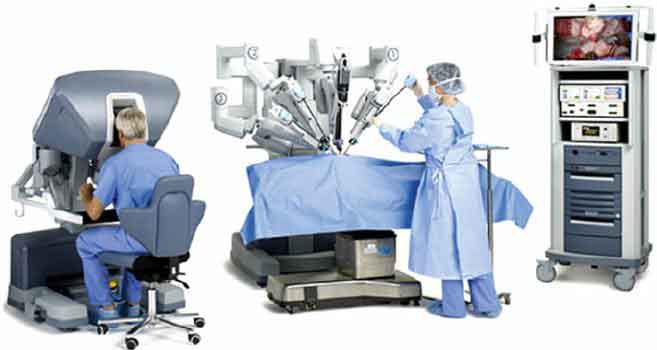
The Surgeon Console
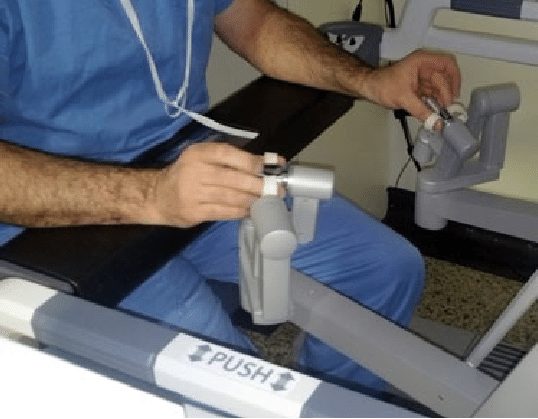
The surgeon sits at this console — away from the operating table but fully in control. The console provides a high-definition, magnified 3D view inside the patient's body, and the surgeon's hand and finger movements are directly translated to the instrument tips. A built-in tremor filter removes any natural hand tremor.
The Patient Cart (Robotic Arms)
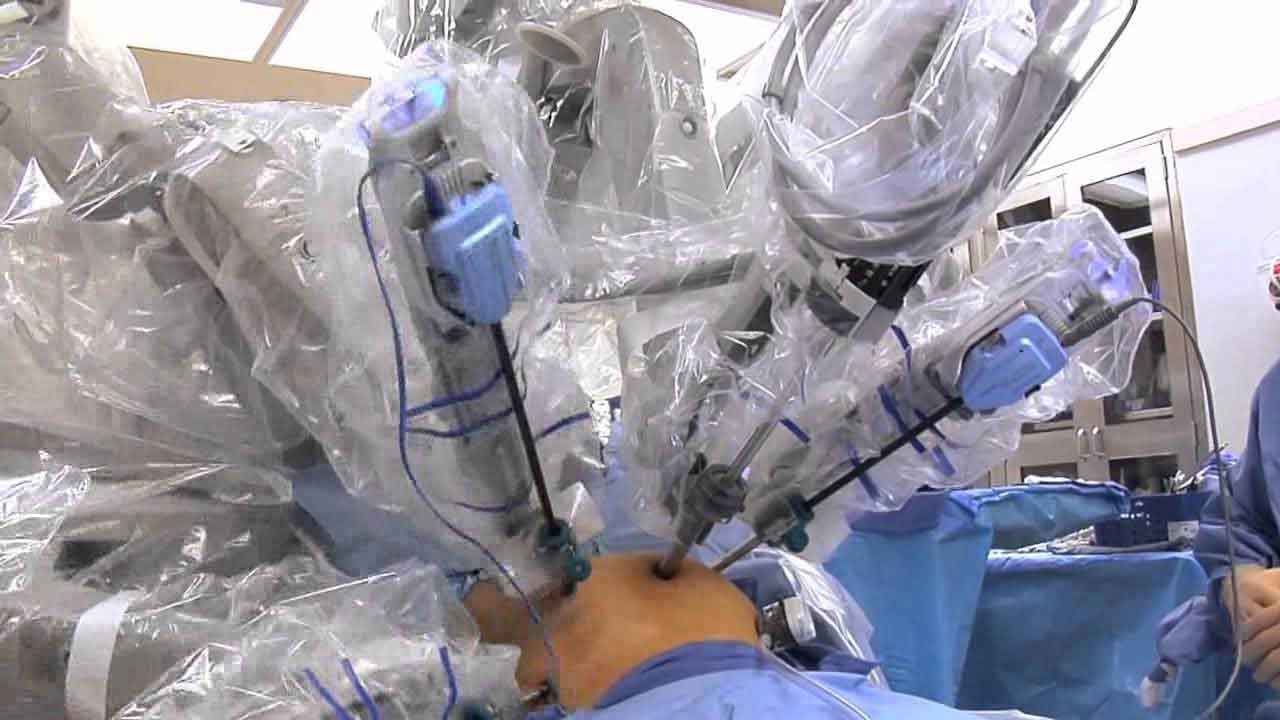
This is the unit positioned over the patient on the operating table. It holds up to four robotic arms — one for the camera, and the others for surgical instruments. Each arm passes through a small keyhole incision. The instruments have a wrist-like joint that can rotate 360° — far beyond the movement range of a human wrist.
The Vision System
A high-definition 3D camera (endoscope) is inserted through one of the small incisions. It transmits a magnified, three-dimensional image to the surgeon's console — giving a much clearer, more detailed view of the surgical field than the human eye sees in open surgery, or the 2D camera in standard laparoscopic surgery.
What Robotic Surgery Offers
For carefully selected procedures and patients, the robotic approach may offer a number of advantages over conventional surgery — both open and laparoscopic.
Magnified 3D Vision
The high-definition 3D camera gives the surgeon a much clearer, more detailed view of the surgical field — helping to identify and protect delicate structures such as nerves and blood vessels.
Greater Precision in Tight Spaces
The wristed instruments can bend and rotate in ways a straight laparoscopic instrument cannot. This is particularly valuable in confined areas such as the pelvis — for example, during rectal cancer surgery or pelvic dissection.
Tremor Filtering
The system automatically filters out any natural tremor or unintended movement in the surgeon's hands. This means the tip of the instrument moves only when the surgeon intends it to.
Small Incisions, Less Scarring
Like laparoscopic surgery, robotic surgery uses small keyhole incisions — typically 8–12 mm each. This means less trauma to the abdominal wall, less post-operative pain, and smaller scars compared to open surgery.
Reduced Blood Loss
The precision of robotic instruments can help reduce bleeding during surgery. Less blood loss generally means a safer operation and a smoother recovery.
Faster Recovery in Many Cases
Minimally invasive surgery — whether robotic or laparoscopic — generally allows patients to get up and move sooner, eat earlier, and go home faster than after open surgery. Recovery varies by procedure and individual.
Procedures Performed Robotically
Dr. Rajeev Kapoor performs a wide range of colorectal, cancer, and general surgical procedures using the robotic approach. The following list reflects the procedures routinely performed at Fortis Hospital Mohali.
Colorectal & Cancer Surgery
Right Hemicolectomy
Removal of the right side of the colon — most commonly for cancer of the right colon (caecum and ascending colon) or occasionally for benign conditions such as severe diverticular disease.
Left Hemicolectomy
Removal of the left side of the colon — for cancer or disease affecting the descending colon.
Sigmoid Resection
Removal of the sigmoid colon — frequently performed for sigmoid cancer, diverticular disease, or complicated diverticulitis.
High Anterior Resection
Removal of the upper rectum and lower sigmoid colon — for upper rectal cancer. The bowel is joined back together (anastomosis) so that a stoma is usually not required.
Low Anterior Resection
Removal of the mid or lower rectum — for cancer of the mid-rectum. The robotic approach is particularly well-suited to this operation due to the precision required in the narrow pelvis.
Abdominoperineal Resection (APR)
Removal of the lower rectum and anus — for cancer at the very bottom of the rectum. Results in a permanent colostomy. The robotic approach helps with precise dissection in this anatomically demanding area.
Total Colectomy
Removal of the entire large bowel — for conditions such as familial polyposis or severe inflammatory bowel disease requiring complete colonic excision.
Pan Colectomy
Removal of the entire colon and rectum — for complex or widespread colorectal conditions where total clearance of the large bowel is necessary.
Pelvic Dissection for Malignancies
Complex dissection within the pelvis for locally advanced cancers involving the rectum, bladder, or surrounding structures. The 3D vision and wristed instruments of the Da Vinci system are particularly valuable for this technically demanding procedure.
Retroperitoneal Lymph Node Dissection
Removal of lymph nodes in the retroperitoneum — for staging or treatment of certain cancers, including colorectal cancer and retroperitoneal malignancies.
General Surgery
Cholecystectomy (Gallbladder Removal)
Removal of the gallbladder for gallstones or gallbladder disease. One of the most commonly performed minimally invasive operations, the robotic approach allows excellent visualisation of the biliary anatomy.
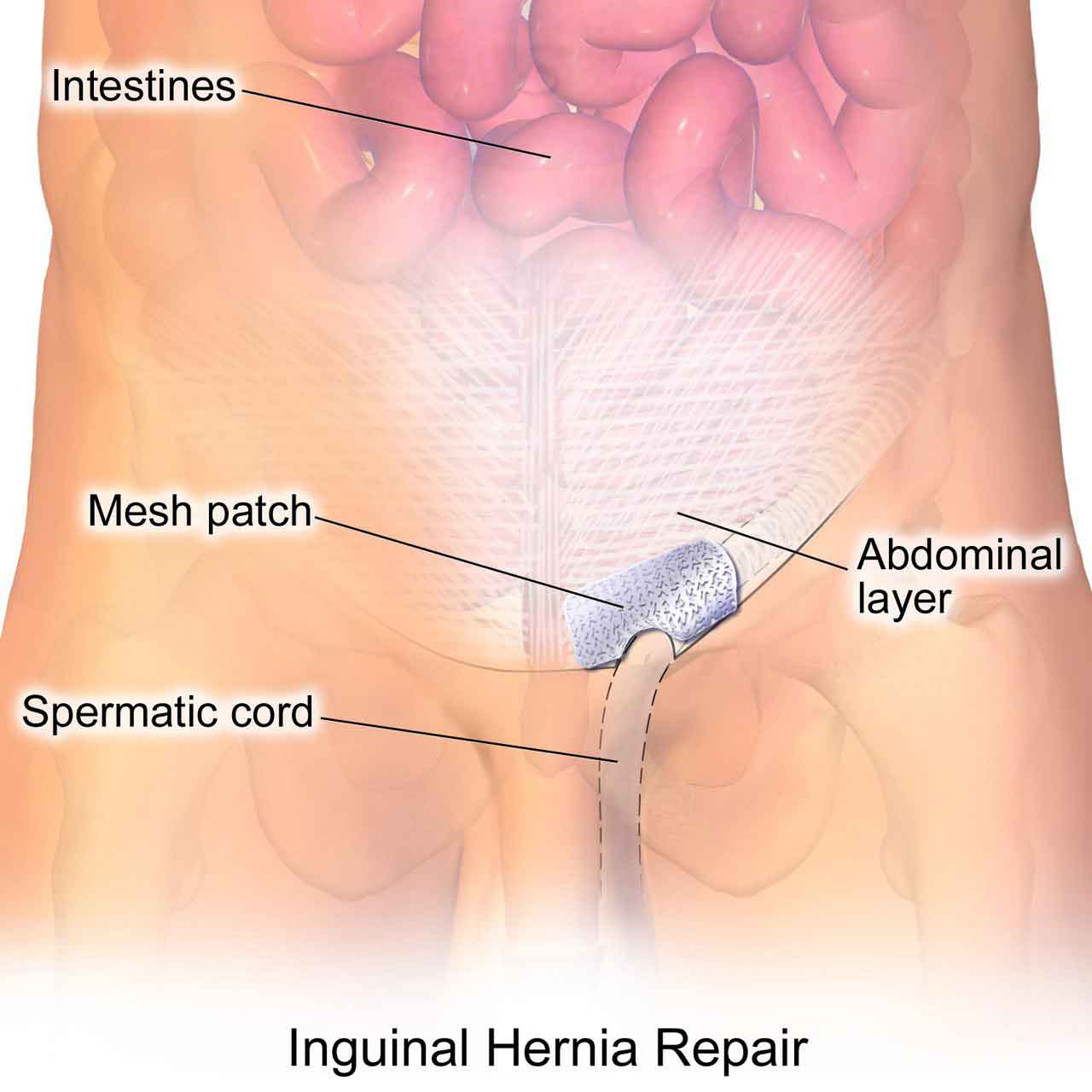
Inguinal Hernia Repair
Repair of a groin hernia using a mesh — most often via a retroperitoneal (TEP/TAPP) approach. The robotic platform gives excellent visualisation for mesh placement and securing, especially in complex or recurrent hernias.
Abdominal Wall Hernia Repair
Repair of hernias in the abdominal wall — including incisional hernias (after previous surgery) and ventral hernias — using mesh reinforcement.
Retroperitoneal Sarcoma Surgery
Surgical removal of tumours in the retroperitoneum (the space behind the abdominal organs). These are complex operations where the precise visualisation offered by robotic surgery can be of value.
Diagnostic Biopsies
For cases where tissue sampling from within the abdomen or pelvis is required for diagnosis. Robotic or laparoscopic biopsy allows targeted sampling with minimal patient impact.
Conditions Treated
The following conditions may be suitable for a robotic surgical approach, depending on individual assessment. Not every patient with these conditions will be a candidate for robotic surgery — your surgeon will advise you based on your specific situation.
For colon cancer and rectal cancer, robotic surgery follows the same oncological principles as open surgery — the same extent of bowel removal, the same lymph node clearance — but through smaller incisions. For diverticular disease, the robotic approach is used when the anatomy is complex or the inflammation makes dissection technically demanding. For cancer surgery involving the pelvis, the Da Vinci system's precision is particularly valuable.
Robotic Surgery vs Laparoscopic Surgery
Both robotic and laparoscopic surgery are minimally invasive — meaning they avoid a large open incision. The differences lie in the technology and the degree of precision available to the surgeon.
| Feature | Robotic Surgery | Laparoscopic Surgery |
|---|---|---|
| Incisions | Small keyhole (8–12 mm) | Small keyhole (5–12 mm) |
| Camera View | High-definition 3D, magnified | Standard HD 2D |
| Instrument Movement | Wristed, 360° rotation — like a wrist inside the body | Straight instruments — limited range of motion |
| Tremor Filtering | Built-in — eliminates hand tremor | None — surgeon's natural hand movement used directly |
| Surgeon Position | Seated at a separate console | Standing at the table |
| Advantage in Tight Spaces (e.g. pelvis) | High — wristed instruments navigate the pelvis with precision | More limited — straight instruments harder to manoeuvre |
| Cost to Patient | Higher — due to equipment, maintenance & single-use instruments | Lower — well-established, widely available equipment |
| Availability | Specialist centres (e.g. Fortis Mohali) | Widely available across hospitals |
| Recovery (general) | Similar to laparoscopic — faster than open | Faster than open surgery |
Neither approach is universally superior. The choice between robotic and laparoscopic surgery depends on the specific procedure, the patient's anatomy, and the surgeon's expertise. For technically demanding operations in confined spaces — such as low rectal cancer surgery — the robotic approach may offer meaningful advantages. For many other procedures, excellent outcomes are achievable with both approaches. Your surgeon will discuss the most appropriate option for you.
What to Expect: Before, During & After
The overall journey for robotic surgery is similar to any planned major operation. Here is a broad outline — your surgical team will give you personalised instructions for your specific procedure.
Before Your Operation
- Your surgeon will explain the procedure, discuss risks, benefits, and alternatives, and answer your questions
- Pre-operative tests — blood tests, ECG, and possibly a chest X-ray or CT scan
- You will be asked to fast from food and fluids for a specified period before surgery
- Your medication list will be reviewed — some medicines need to be stopped or adjusted
- An anaesthetist will assess you and discuss the anaesthetic plan
During the Operation
- You will be under general anaesthesia — completely asleep throughout
- Small keyhole incisions (usually 3–5) are made in the abdomen
- The robotic arms are positioned; the surgeon operates from the console
- The procedure is completed; instruments and camera are removed; incisions are closed with sutures or clips
- Operating time varies by procedure — typically 2–4 hours for colorectal operations
After Surgery & Recovery
- You will wake in the recovery area, then be moved to your ward
- Most patients are sitting up and walking the following day
- Liquids are usually introduced within 24 hours, soft diet within 2–3 days
- Hospital stay: 3–6 days for most colorectal procedures, shorter for hernia or cholecystectomy
- Return to desk work: typically 2–3 weeks; physical or manual work: 4–6 weeks
- Follow-up appointment will be arranged before discharge
Frequently Asked Questions
Common questions about robotic surgery — including how it compares to laparoscopic surgery, and what it costs.
Related Pages
For appointments or enquiries: Contact page | drrajeevkapoor.com