Laparoscopic Surgery

Laparoscopic Hernia Repair
Hernia

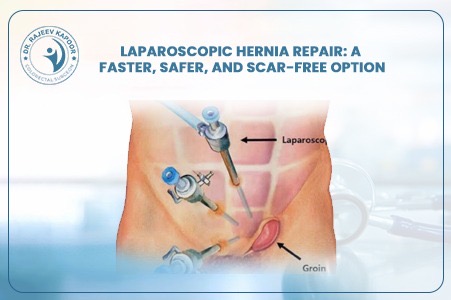
Laparoscopic Hernia Repair: A Faster, Safer, and Scar-Free Option

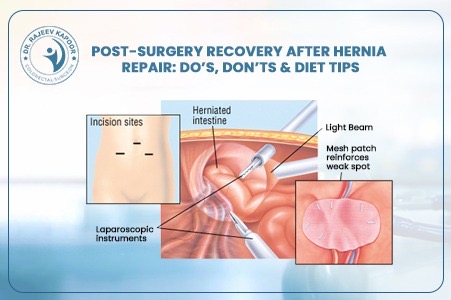
Gone are the days when hernia surgery meant long incisions, painful recovery, and weeks away from work. With the advent of laparoscopic hernia repair, patients now enjoy a quicker, safer, and far more comfortable experience. “Laparoscopy has transformed hernia treatment into a day-care procedure — patients walk home the same day with minimal pain,” says Dr. Rajeev Kapoor, senior gastrointestinal and laparoscopic surgeon in Chandigarh. 1️⃣ What Is Laparoscopic Hernia Repair? Laparoscopic hernia repair, also known as keyhole surgery, involves repairing the hernia through three tiny incisions (each about 0.5–1 cm). A thin tube with a camera (laparoscope) is inserted to provide a magnified, high-definition view of the internal structures. Using specialized instruments, the surgeon gently pushes the protruding tissue back into place and reinforces the weak spot with a surgical mesh, ensuring long-term strength. 2️⃣ How It Differs from Open Surgery Aspect Open Hernia Repair Laparoscopic Hernia Repair Incision Size 6–10 cm (large cut) 0.5–1 cm (keyhole) Pain & Recovery Moderate to high pain, longer rest Minimal pain, rapid recovery Hospital Stay 2–4 days Same-day discharge (24 hrs max) Scarring Visible scar Nearly invisible Recurrence Rate Slightly higher Very low when done by experts Return to Work 10–15 days 3–5 days “With modern mesh technology and precision tools, laparoscopic surgery ensures faster healing and excellent long-term results,” notes Dr. Kapoor. 3️⃣ Who Can Benefit from Laparoscopic Hernia Surgery? Laparoscopic repair is suitable for: Inguinal (groin) hernias — the most common type in men  Bilateral hernias (both sides)  Recurrent hernias (after open surgery)  Umbilical and incisional hernias  Obese patients, where open surgery carries more risk  However, for very large or complicated hernias, Dr. Kapoor carefully evaluates whether a minimally invasive approach is the safest option. 4️⃣ Step-by-Step: The Laparoscopic Procedure General anesthesia is given for patient comfort.  Small incisions are made near the navel.  A laparoscope provides a magnified view of the hernia and surrounding tissue.  The protruding tissue is gently repositioned inside the abdomen.  A medical-grade mesh is placed over the weak area to reinforce the wall.  The incisions are closed with absorbable sutures — leaving minimal or no visible scar.  The entire procedure typically takes 45–60 minutes. 5️⃣ Recovery and Post-Surgery Care Walking: Within 4–6 hours post-surgery  Diet: Light meals on the same day  Return to Work: Usually within 3–5 days  Exercise/Lifting: Avoid heavy weights for 4–6 weeks  Follow-Up: Regular reviews ensure healing and prevent recurrence  “Most of my patients resume routine activities within a week — it’s that smooth and safe,” shares Dr. Kapoor. 6️⃣ Advantages of Laparoscopic Hernia Repair ✅ Smaller incisions, minimal pain ✅ Shorter hospital stay or same-day discharge ✅ Early mobility and faster return to daily life ✅ Reduced infection and recurrence rates ✅ Cosmetic benefit – almost no visible scar 7️⃣ Why Choose Dr. Rajeev Kapoor for Hernia Surgery Over two decades of surgical expertise in gastrointestinal and laparoscopic procedures  Specialized in complex hernias and recurrent cases  Uses international-grade mesh and advanced laparoscopic systems  Focus on patient comfort, precision, and long-term success  Conclusion Laparoscopic hernia repair represents the future of hernia management — safe, effective, and minimally invasive. For patients seeking faster recovery, smaller scars, and lasting relief, it’s the clear choice. Dr. Rajeev Kapoor, one of Chandigarh’s most trusted laparoscopic surgeons, offers advanced hernia care using the latest global techniques and technologies — ensuring both comfort and confidence.
myth and fact about Hernia
Hernia Surgery

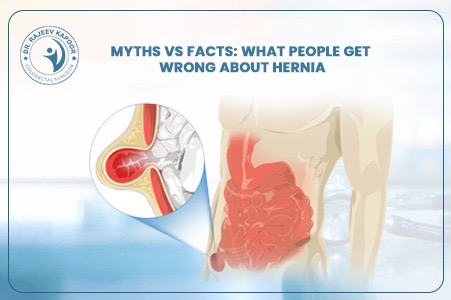
Myths vs Facts: What People Get Wrong About Hernia

Hernia is a very common condition — yet it remains surrounded by misconceptions and half-truths. From “it can be treated with belts” to “you should avoid surgery as long as possible,” these myths often lead patients to delay treatment until the problem becomes serious. “When it comes to hernia, misinformation can be more dangerous than the disease itself,” says Dr. Rajeev Kapoor, senior gastrointestinal and laparoscopic surgeon at Chandigarh. “Early evaluation and timely repair are the real keys to long-term health.” 1️⃣ Myth: A hernia will heal on its own with rest or medication. Fact: A hernia is a structural defect — a hole or weakness in the muscle layer. No medicine, bandage, or exercise can close that defect. Only surgical repair can permanently restore the muscle wall. “Ignoring a hernia does not make it disappear — it only increases the risk of complications like incarceration or strangulation,” explains Dr. Kapoor. 2️⃣ Myth: Wearing a hernia belt or truss can cure it. Fact: Belts may temporarily hold the bulge in place, but they cannot fix the underlying defect. Prolonged use can actually worsen the weakness and cause skin irritation or ulcers. Belts are like band-aids — they offer temporary comfort, not a solution. 3️⃣ Myth: Hernia surgery is painful and requires a long recovery. Fact: Thanks to modern laparoscopic and robotic techniques, hernia surgery today is minimally invasive, almost painless, and often day-care-based. Patients can usually walk within hours and return to routine work in 3–5 days. “The technology we use reduces pain, speeds up healing, and leaves hardly any scar,” notes Dr. Kapoor. 4️⃣ Myth: If a hernia doesn’t hurt, it doesn’t need treatment. Fact: A hernia may remain painless for months, but it continues to grow and weaken the tissue. At any time, a loop of intestine can get trapped (incarcerated) and lose its blood supply (strangulated hernia) — a life-threatening emergency that requires urgent surgery. Pain is not the only indicator of seriousness — size and progression matter more, warns Dr. Kapoor. 5️⃣ Myth: Heavy lifting is the only cause of hernia. Fact: While straining does increase pressure inside the abdomen, hernia often develops due to a combination of factors — genetic weakness, obesity, chronic cough, constipation, pregnancy, or previous surgeries. Even people who don’t lift weights can develop a hernia. 6️⃣ Myth: Once repaired, a hernia always comes back. Fact: Recurrence is extremely rare when the surgery is performed by an experienced laparoscopic surgeon using high-quality mesh and modern techniques. Following post-surgery guidelines — avoiding heavy lifting, controlling weight, and treating cough — further reduces risk. “With current advancements, hernia repair has a success rate of over 98 percent,” adds Dr. Kapoor. 7️⃣ Myth: You can live with a hernia for years without problems. Fact: Every hernia grows over time. Delaying treatment only increases its size and makes surgery more complicated. In worst cases, a strangulated hernia can cut off blood supply to the intestine — a medical emergency. Conclusion Knowledge is the first step to prevention and early care. Believing myths can lead to delays that turn a simple hernia into a serious condition. Modern laparoscopic surgery is safe, fast, and effective — the real solution for lasting relief. If you notice a persistent bulge or discomfort in the abdomen or groin, don’t wait for it to “settle.” Book a consultation with Dr. Rajeev Kapoor, Chandigarh’s trusted specialist for laparoscopic hernia and gastrointestinal surgery.

After Hernia Repair
Hernia

Post-Surgery Recovery After Hernia Repair: Do’s, Don’ts & Diet Tips

Modern hernia surgery is safe, effective, and minimally invasive — but recovery plays a crucial role in ensuring long-term success. Following the right post-operative care routine can help you heal faster, prevent recurrence, and return to your normal life within days. “Recovery from hernia surgery is not about rest alone — it’s about smart movement, good nutrition, and consistent follow-up,” says Dr. Rajeev Kapoor, senior gastrointestinal and laparoscopic surgeon in Chandigarh. 1️⃣ The First 24 Hours: What to Expect After laparoscopic or open hernia repair, patients typically spend a few hours in recovery. Mild discomfort, tightness, or swelling near the incision is normal. You’ll be encouraged to walk within 4–6 hours to improve circulation and prevent blood clots. Light food and fluids can be resumed the same day unless otherwise advised. “Early mobilization helps the body heal faster and prevents complications like constipation or lung infection,” explains Dr. Kapoor. 2️⃣ Do’s After Hernia Surgery ✅ Follow your surgeon’s instructions: Take prescribed antibiotics and painkillers on time. ✅ Stay active but gentle: Short walks 2–3 times a day help recovery. ✅ Support your incision: Use your hand or a small pillow while coughing or sneezing. ✅ Keep the wound clean and dry: Change dressings as advised. ✅ Eat a fiber-rich diet: Prevents constipation and straining. ✅ Stay hydrated: At least 2–3 liters of water daily. ✅ Attend all follow-up appointments: Helps monitor healing and mesh integration. 3️⃣ Don’ts After Hernia Surgery 🚫 Don’t lift heavy objects (>5 kg) for at least 4–6 weeks. 🚫 Don’t drive for the first few days until pain-free movement returns. 🚫 Don’t strain during bowel movements — use stool softeners if needed. 🚫 Don’t smoke or drink alcohol — they slow healing and increase infection risk. 🚫 Don’t skip medications or remove dressings prematurely. “Even if you feel fine, pushing yourself too early can strain the surgical site and delay recovery,” advises Dr. Kapoor. 4️⃣ Diet Plan for a Smooth Recovery Meal Type Recommended Foods Why It Helps Breakfast Oats, fruit smoothie, boiled eggs Energy + easy digestion Lunch Dal, rice, soft vegetables, curd Balanced nutrients, light on stomach Dinner Soups, khichdi, grilled fish/chicken Protein for tissue healing Snacks Coconut water, fruits, nuts Maintains hydration and immunity Avoid Fried foods, spicy curries, carbonated drinks Can cause bloating & discomfort “Nutrition is your body’s repair kit — protein, fiber, and fluids are the building blocks of healing,” says Dr. Kapoor. 5️⃣ When to Contact Your Doctor Seek medical attention if you experience: Persistent fever (>101°F) Redness, pus, or foul discharge from the incision Severe pain or swelling Vomiting, constipation, or inability to pass gas Reappearance of bulge or hardness at the surgical site “Early reporting of warning signs ensures quick correction and prevents major complications,” notes Dr. Kapoor. 6️⃣ Returning to Normal Life Office work: Usually within 3–5 days (for laparoscopic repair) Exercise: Light stretching after 2 weeks; no weightlifting for 6 weeks Travel: Safe after 1 week, depending on comfort Sexual activity: Generally after 2–3 weeks, with doctor’s clearance Conclusion Recovering from hernia surgery doesn’t have to be stressful. With proper care, good diet, and adherence to medical advice, most patients resume normal life within a few days — free from pain and discomfort. For advanced laparoscopic hernia repair and personalized recovery care, consult Dr. Rajeev Kapoor, one of Chandigarh’s most trusted specialists in gastrointestinal and minimally invasive surgery.

Recurrent Hernia in Chandigarh
Recurrent Hernia

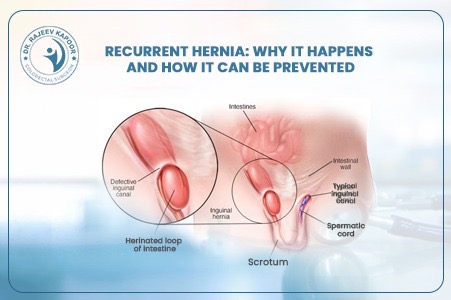
Recurrent Hernia: Why It Happens and How It Can Be Prevented

While most hernias are completely curable with proper surgery, a small percentage can reappear months or years later — known as a recurrent hernia. “Recurrence is not common today, but when it occurs, it’s usually because the original repair was weak or the patient’s recovery protocol wasn’t followed carefully,” says Dr. Rajeev Kapoor, senior gastrointestinal and laparoscopic surgeon, Chandigarh. A recurrent hernia can cause greater discomfort than the first one — but with the latest mesh technology and laparoscopic repair, it can be corrected safely and permanently. 1️⃣ What Is a Recurrent Hernia? A recurrent hernia develops at or near the site of a previous hernia repair. The repaired muscle or mesh may weaken again, allowing tissue to bulge through the same area. It can appear months or even years after the initial surgery. 2️⃣ Common Causes of Hernia Recurrence Cause Explanation Poor tissue healing Smoking, diabetes, or poor nutrition may weaken tissue strength. Infection after surgery Delayed healing or mesh rejection can compromise the repair. Excessive strain Lifting weights, coughing, or constipation soon after surgery. Obesity Increases intra-abdominal pressure. Inappropriate surgical technique Incorrect mesh placement or under-tension repairs. “In most cases, the issue isn’t the mesh itself — it’s the pressure the body puts on it before full healing,” Dr. Kapoor explains. 3️⃣ Symptoms of a Recurrent Hernia A new lump or bulge at the previous surgical site  Pain or burning sensation that worsens on coughing or standing  Heaviness, bloating, or tightness in the abdomen  In severe cases: nausea, vomiting, or bowel obstruction symptoms  4️⃣ How Recurrent Hernias Are Treated a. Laparoscopic Re-repair (Preferred Method) Using keyhole incisions, the surgeon places a new mesh layer from behind the muscle, reinforcing the weak area without disturbing old scar tissue. Advantages: ✅ Minimal trauma and pain ✅ Better visualization of old repair ✅ Reduced infection risk ✅ Shorter hospital stay b. Open Re-repair Reserved for very large or complex cases. Involves removing old mesh and reconstructing the defect. “Laparoscopy has revolutionized redo surgeries — we can operate safely even when there’s old mesh or scar tissue,” adds Dr. Kapoor. 5️⃣ Preventing Hernia Recurrence Before Surgery: Quit smoking and manage diabetes.  Achieve a healthy weight.  After Surgery: ✅ Avoid lifting >5 kg for six weeks. ✅ Treat cough and constipation promptly. ✅ Eat protein-rich foods (eggs, dal, fish, paneer) to promote healing. ✅ Stay active but avoid strain. ✅ Attend follow-ups as advised. 6️⃣ Long-Term Outlook With modern laparoscopic mesh reinforcement and patient compliance, the recurrence rate has dropped below 1–2 % in expert hands. “In experienced centres, recurrent hernias have become extremely rare. Precision, planning, and patient discipline make all the difference,” notes Dr. Kapoor. Conclusion A recurrent hernia can be frustrating, but it’s far from untreatable. Advanced laparoscopic repair offers a durable, scar-free solution with quick recovery. If you’ve previously undergone hernia surgery and notice a new bulge or discomfort, consult Dr. Rajeev Kapoor, one of Chandigarh’s leading specialists in complex and recurrent hernia management.

Hiatal Hernia Treatment in Chandigarh
Hiatal Hernia

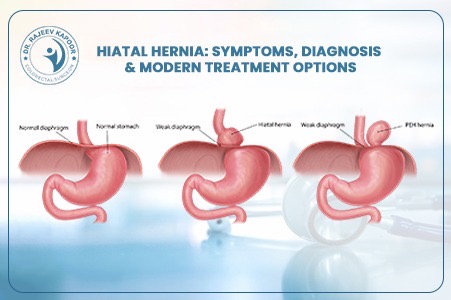
Hiatal Hernia: Symptoms, Diagnosis & Modern Treatment Options

Heartburn after every meal? A burning sensation in your chest that worsens when you lie down? It might not always be acidity — it could be a hiatal hernia. “Hiatal hernia is one of the most under-diagnosed digestive conditions — often mistaken for acidity or reflux,” says Dr. Rajeev Kapoor, senior gastrointestinal and laparoscopic surgeon in Chandigarh. “But with timely detection, it can be managed or corrected effectively.” 1️⃣ What Is a Hiatal Hernia? A hiatal hernia occurs when the upper part of the stomach pushes up through the diaphragm — the muscle separating the chest from the abdomen — into the chest cavity. There are two main types: Sliding Hiatal Hernia: The stomach and lower esophagus slide up into the chest (most common). Paraesophageal Hernia: Part of the stomach pushes beside the esophagus — rarer, but potentially more serious. 2️⃣ What Causes a Hiatal Hernia? Hiatal hernias usually develop when the diaphragm weakens or when abdominal pressure increases. Common causes include: Chronic acid reflux (GERD) Obesity or sudden weight gain Pregnancy (temporary increase in abdominal pressure) Frequent coughing or straining (constipation, lifting heavy weights) Aging, which naturally weakens muscle tissue “It’s not just lifestyle — sometimes it’s structural. But correcting lifestyle factors makes treatment far easier,” Dr. Kapoor notes. 3️⃣ Common Symptoms You Shouldn’t Ignore Hiatal hernias can mimic acidity or gastritis. Typical symptoms include: Heartburn or burning in the chest after meals Regurgitation of food or sour liquid Difficulty swallowing (dysphagia) Chest discomfort after bending or lying down Chronic cough or throat irritation In severe cases: vomiting blood or black stools (from ulceration) If you experience reflux that persists despite medication, it’s worth consulting a specialist. 4️⃣ Diagnosis of Hiatal Hernia A few simple, non-invasive tests confirm the diagnosis: Upper GI Endoscopy: Direct visualization of the hernia and any reflux damage Barium Swallow X-Ray: Shows stomach’s position in the chest Esophageal Manometry: Measures muscle strength and coordination during swallowing “Endoscopy remains the gold standard — it helps us assess both the hernia and the degree of reflux,” says Dr. Kapoor. 5️⃣ Treatment Options a. Lifestyle & Medical Management (for small hernias) Eat smaller, more frequent meals Avoid lying down for 2–3 hours after eating Elevate head while sleeping Avoid spicy foods, caffeine, and alcohol Maintain healthy body weight Proton Pump Inhibitors (PPIs) or antacids may reduce acid production b. Surgical Management (for large or symptomatic hernias) When symptoms persist or complications arise, laparoscopic hiatal hernia repair is recommended. This involves: Gently repositioning the stomach into the abdomen Tightening the diaphragm opening Reinforcing the area with surgical mesh if needed Often combined with fundoplication (wrapping the stomach around the esophagus) to prevent acid reflux “Laparoscopic repair offers a near-permanent cure — most patients resume normal life within a few days,” explains Dr. Kapoor. 6️⃣ Recovery and Outlook Hospital stay: 1–2 days Diet: Liquids for 2–3 days, then soft foods Return to work: 5–7 days Long-term results: Over 90–95 % success rate with minimal recurrence 7️⃣ When to See a Doctor Immediately Seek urgent help if you experience: Sudden, severe chest or abdominal pain Persistent vomiting Difficulty breathing or swallowing Black, tarry stools (sign of internal bleeding) Conclusion Hiatal hernia is common but highly manageable when diagnosed early. Modern laparoscopic techniques now offer quick recovery, minimal discomfort, and lasting relief from chronic reflux. For expert evaluation and advanced hiatal hernia treatment, consult Dr. Rajeev Kapoor, one of Chandigarh’s most trusted names in gastrointestinal and minimally invasive surgery.

Surgical Option for Right Colon Cancer – Right Hemicolectomy
Colon Cancer Surgery

Surgical Option for Right Colon Cancer – Right Hemicolectomy

Surgical Option for Right Colon Cancer – Right Hemicolectomy Right hemicolectomy is a surgical Process commonly performed to treat colon cancer affecting the right side of the colon. It involves the removal of the affected portion of the colon, along with nearby lymph nodes. Let’s now  read up an overview of right hemicolectomy, including its purpose, surgical process, recovery, and potential benefits.   Right hemicolectomy is performed for the following purposes: Cancer removal: The primary goal of right hemicolectomy is to remove the tumor and any surrounding tissue affected by colon cancer. This helps eliminate cancer cells and prevent the spread of the disease. Lymph node evaluation: Right hemicolectomy includes the removal of nearby lymph nodes. These lymph nodes are examined to determine if cancer has spread beyond the colon, aiding in accurate staging and further treatment decisions.  Bowel continuity preservation: Whenever possible, the surgeon aims to reconnect the remaining healthy portions of the colon to maintain bowel continuity. This allows for the restoration of normal bowel function and helps preserve quality of life. Nowadays, right hemicolectomy is performed with minimal access aids; which are laparoscopy or robotic surgery   Details of the Open Surgical Procedure: The surgical method for right hemicolectomy typically involves the following steps: Anesthesia: The patient is given general anesthesia, ensuring they are unconscious and pain-free throughout the procedure. Incision: The surgeon makes an incision in the abdomen, usually on the right side. Mobilization: The right colon, including the cecum, ascending colon, and a portion of the transverse colon, is carefully freed from surrounding tissues. Lymph node dissection: Nearby lymph nodes are meticulously identified and removed for further evaluation. Resection: The affected portion of the colon, along with the tumor, is surgically resected. The remaining healthy ends of the colon are prepared for reconnection. Anastomosis: The surgeon reconnects the healthy ends of the colon, allowing for the restoration of the digestive tract’s normal function. This may involve stitching the ends together (primary anastomosis) or creating a temporary colostomy or ileostomy (an opening in the abdomen for waste elimination). Closure: The incision is closed, and a drain may be placed to remove excess fluids.   Recovery and Benefits: After a right hemicolectomy, the patient will undergo a recovery period, which includes: Hospital Stay: The length of hospitalization varies depending on individual factors and the complexity of the surgery, typically ranging from 4 to 7 days. Pain Management: Medications will be provided to manage postoperative pain. Diet: Initially, the patient may receive intravenous fluids and gradually transition to a clear liquid diet before advancing to solid foods. Physical Activity: The surgical team will provide guidance on gradually increasing physical activity and resuming normal daily activities. Follow-up Care: Regular follow-up appointments will be organized to monitor recovery, discuss pathology results, and determine the essential for further treatment, such as chemotherapy.   The benefits of right hemicolectomy for colon cancer include: Cancer removal: Right hemicolectomy helps eliminate cancerous tissue, reducing the risk of further disease progression. Lymph node evaluation: The removal and examination of nearby lymph nodes aid in accurate staging and facilitate appropriate treatment planning. Bowel function restoration: Whenever possible, right hemicolectomy preserves bowel continuity, allowing for the restoration of normal bowel function and quality of life. Conclusion: Right hemicolectomy is a surgical procedure performed to treat colon cancer affecting the right side of the colon. It involves the removal of the affected portion of the colon and nearby lymph nodes. By removing cancerous tissue, evaluating lymph nodes, and preserving bowel continuity, right hemicolectomy aims to eliminate cancer cells, determine the extent of the disease, and restore normal bowel function. If you or a loved one is considering right hemicolectomy, it is essential to consult with a colorectal surgeon for personalized advice and comprehensive information tailored to your specific case. This surgery can be performed with the aid of laparoscopy or robot. See Also:  Understanding Right Colon Cancer: Symptoms, Diagnosis, and Treatment Options  

Survivor Story: Colon Cancer Surgery – During and After
Cancer, Colon Cancer Surgery, Colon. Cancer, Colorectal Cancer, Colorectal Surgery, Survivor story

Survivor Story: Colon Cancer Surgery – During and After

This is a story of one of my patient about her fight with colon cancer. She wanted to write and I encouraged her to put her experience in words. She did so, but decided that she wanted her name be changed. It all began in 2016. Sonia, a 46-year-old, mom of a then 20 year old was working full time awakened with what she assumed was a stomach ache that just didn’t want to disappear. Throughout the day it seemed to get worse and by that night she could not walk. Her husband was away on a business trip and thus her daughter, who was in Delhi university returned and took her to the hospital. Also See: Colon Cancer Surgeon in Chandigarh Diagnosis of colon cancer Lot of tests were done and the CAT Scan found a mass in her right colon which looked like a tumour. She remained in the hospital for seven days. As she writes, “Ten days of worry, testing, scans, surgical treatment and also a lot of bonding with the nurses”. During that time, a colonoscopy confirmed that the tumour had actually shut off her colon, a Pet scan validated that it had grown past the colon walls and also into the lymph nodes. So she had what we call cancer of the right colon. Once a cancer is diagnosed with colonoscopy and biopsy, the PET CT assesses the entire body for any spread. After these tests, we stage the tumour by giving it a number. Thus Sonia had stage 3 of right sided cancer of the colon and required urgent colon cancer surgery as the lesion was obstructing her ascending colon. This is called a obstructing colon cancer is normal parlance. Colon Cancer Surgery Laparoscopic surgical treatment removed the tumour, 24 cm of colon and also 21 lymph nodes. She recovered well to go home and to be followed up in the OPD. Her case was discussed in hospital tumour board and her cancer was labelled as a Stage III Colon Cancer. Her final biopsy had shown some small vessel infiltration. She was referred to medical oncologist, who made a decision that even though the nodes weren’t impacted, it would be only a short time prior to they would certainly have been, so they decided to give her chemotherapy. This is what Sonia says “Up until this point, I had been living with an extremely worn out sensation at all times as well as taking medication for chest allergy due to the fact that I was having a difficult time capturing my breath. However it turned out I was extremely anaemic and B-12 deficient. My haemoglobin was so low. After the surgery, I felt better as I had received blood transfusions. My pain was gone and since there was no big incision for my surgery, I started feeling good and cheerful” Colon cancer chemotherapy Chemotherapy treatment started a month later and consisted of 5FU, Leucovorin and Oxalliplatin. She writes “life was far from typical. I needed to take added iron tablets as well as have B-12 shots. I got on 3 types of anti-nausea drug. My hair fell from the chemo, I had consistent nose and anal bleeds but had the ability to maintain my composure as well as a will to survive.” So all patients of stage 3 and 4 with colon cancer receive chemotherapy after colon cancer surgery. Some patients of stage 2 also receive chemotherapy after colon cancer surgery as they have some bad prognostic markers. Sonia had obstruction as well as some small vessel infiltration with tumour and thus was earmarked for chemotherapy. The chemotherapy is started about 4 weeks after the surgery and the wounds are completely healed. In the interim a port is inserted to deliver chemotherapy. Sonia writes “I still had fatigue however, I had to will myself to try as well as live a rather regular life. Strolling was difficult as a result of the wooziness. I fell a number of times due to the enduring neuropathy in my feet. I had several issues with my power port but in the end everything worked well. Throughout this experience I utilized the expression “It’s all excellent” as my reply when asked just how I was doing.” Also See Rectal Cancer Surgeon in Chandigarh Colon cancer surveillance Sonia will be followed up every 3 months for five years, with proceeded checks up to 10 years. Sonia has persuaded her friends to go for screening and all have lately been checked out by their doctors. Colon cancer presents in many ways. Sonia had a complicated presentation as she developed intestinal obstruction because of colon cancer. Colon cancer surgery remains the mainstay of treatment. Laparoscopic surgery is the preferred method to do surgery. The surgeries include right, extended right or left hemicolectomy. Chemotherapy is given after surgery for some stage 2, stage 3 and stage 4 colon cancers. Preoperative chemotherapy may be used in stage 4 cancers before surgery is planned. Survival is very good in colon cancer and one should not give up hope. Sonia’s story should be a great motivator for all patients with colon cancer.

Minimally Invasive Surgery for Colorectal Diseases
Colorectal Surgery, Laparoscopic Surgery, Robotic Surgery

Minimally Invasive Surgery for Colorectal Diseases

Minimally Invasive Surgery for Colorectal Diseases – It is also known as Key Hole Surgery. Many diseases as well as conditions of the colon and anus are treated surgically. A surgeon may use typical (open) or minimally invasive strategies relying on the specific situation. Minimally invasive colon and also rectal surgical treatment is a consistently evolving field. Each year brings new info based on additional improvements and raising use of these methods. Open versus minimally invasive colon and rectal surgery In typical open abdominal surgical treatments, doctors generally make a cut 6 to 12 inches in length, big sufficient to supply adequate visibility, offer accessibility to the abdominal organs and also allow the use of hand-held surgical instruments. Minimally invasive surgeries have been created to do operations via smaller incisions, minimizing the pain and also healing complications associated with lengthy incisions. Minimally invasive surgery can be made use of to effectively treat a range of common benign and also malignant colon and also anal conditions. All minimally invasive methods require advanced surgical skills as well as customized equipment. Colorectal surgeons have had progressed training in minimally invasive surgical procedure. All minimally invasive surgical procedures are executed with the patient asleep under an aesthetic. All the techniques listed here are considered “minimally invasive,” however might differ somewhat in their total benefits and also negative aspects. Laparoscopic surgery The doctor makes numerous tiny cuts about half inch in dimension. Throughout laparoscopic procedures, an electronic camera is positioned inside one of the cuts, allowing the doctor to check out the within the abdominal area on monitors or tv displays For many colon and also anal operations, 2-4 small cuts are needed. Co2 gas is utilized to blow up the abdominal area in order to give the specialist area to work. To perform the surgical procedure, unique instruments are put via the various ports inserted through these small incisions, permitting the surgeon to operate inside the abdomen by checking out the electronic cameras. For lots of colon and also rectal procedures, one a little larger incision (about 2-4 inches in size) need to be made in order to remove a piece of intestinal tract which has the disease and has been resected. When a part of the surgical treatment is done with this smaller sized laceration this may be called “laparoscopic-assisted surgery.” IT can be effectively used for colon and rectal cancers. Robotic surgical treatment or robotic-assisted surgical procedure This method permits a colorectal surgeon to control a robot that holds the surgical instruments. Similar to laparoscopic surgery, a camera as well as specialized instruments are placed through small incisions. The doctor works from a console in the operating room where they have a 3D sight of the surgical area and also control instruments attached to the robot. An innovative computer system translates the activities of the surgeon’s hands to the robot, which then moves the surgical tools. Robot surgical treatment is gaining popularity primarily for rectal operations since the robotic tools are well equipped to operate in the narrow pelvis where laparoscopic surgery is more difficult. Advantages of minimally invasive surgery. Cuts are a lot smaller sized than those made use of in traditional surgical procedure. Decreased postoperative discomfort. Shorter hospital remains. Lowered requirement for prescription pain drugs. Earlier go back to regular tasks. Much less noticeable scarring. It is very important to note that outcomes are similar between open and minimally invasive procedures. Nevertheless, minimally invasive surgery uses potential advantages in the early post-surgery recuperation period. Dangers of minimally invasive surgery. The danger of complications is similar to that of traditional open surgery. Every surgery, whether minimally invasive or traditional, brings some risk of problems. Risks usual to both open and minimally invasive colon and anal surgical treatment include blood loss, infection, post-operative digestive tract obstruction as well as leak from a intestinal anastomosis (reconnection). Other threats, such as heart problems, pneumonia and embolism exist with any major surgical procedure requiring general anaesthesia. Periodically, a specialist will experience conditions throughout surgery that would certainly make proceeding with minimally invasive surgical treatment dangerous. In this scenario, the incision is enlarged to permit traditional surgical strategies to be made use of to complete the operation. This is referred to as a “conversion” to typical or “open” surgery. Minimally invasive surgical procedure is not appropriate for all clients or problems. Conclusion: Technology has brought about changes in how surgery is done. Laparoscopic surgery has been around for almost 30 years now. Robotic Surgery is a newer modality and been around for almost five years. Considerable training and experience are required for these procedures like for any other surgical experience. Open surgery is still the backbone of any procedure especially when minimally invasive surgery is difficult or not possible. However, majority of cancers of the colon and rectal tumours are nowadays operated with minimally invasive techniques. Also See Colectomy Surgery in Chandigarh Cervical Cancer Surgery in Chandigarh

General Surgery, Hernia Surgery, Laparoscopic Surgery

Inguinal (Groin) Hernia: Management and Treatment

Know everything about groin hernia What is a hernia? A hernia is a typical problem that happens when part of an indoor body organ or intestinal tract protrudes via a muscle out as a bulge. Hernias can occur around the belly button, by means of a medical scar (incisional hernia), in the diaphragm, or in the groin (the location in between the abdomen as well as the upper leg on both sides of the body). Also See: Hernia Surgeon in Chandigarh What is an inguinal hernia? An inguinal hernia occurs when a part of the intestinal tract  or fat from the abdominal cavity protrude out as a lump via the weak abdominal wall surface area into the inguinal, or groin region. It could be unilateral or bilateral. Age: It can occur at any age. In children it could be a congenital in origin. Heavy exercise can cause it in adulthood. Elder can have it and actually it is common after the age of 40. Male over age 40 are much more most likely to get direct inguinal hernias than women. Relating to 25% of males, in addition to simply around 2% of ladies, will certainly develop an inguinal hernia in their life time. Predisposing factors: A family history of having an inguinal hernia, smoking cigarettes, and also people that have had previous abdominal surgical procedure are at greater risk for obtaining an inguinal hernia. What is a incarcerated or strangulated inguinal hernia? Incarcerated or strangulation of inguinal hernias is unusual, yet severe concerns can produce if a hernia is left ignored. Incarceration happens when part of the fat or digestive system from inside the abdominal area gets stuck in the groin or scrotum as well as cannot be returned or pushed back into the abdominal area. Strangulation can occur when incarcerated hernia is not treated and the part inside the hernia gets gangrenous. Strangulated hernia is an emergency situation and also may result in some loss of intestinal tract. The main symptoms include pain, redness, inability to be able to reduce the hernia and tender to touch. Also See: Robotic Surgeon in Chandigarh What are the signs of an inguinal hernia? A lump on one or both sides of the groin that disappears when lying down. Discomfort in the groin, specifically when training, coughing or exercising. An experience of weak point, thickness or burning in the groin. A puffy scrotum (the sac-like a part of the male genitalia below the penis). Do all inguinal hernias call for surgical procedure? Yes. All inguinal hernia need surgical procedure. It will certainly not get better or disappear on its own. Just how is an inguinal hernia repaired? Inguinal hernia fixing is a common surgery, which is called herniorrhaphy or hernioplasty. It is done laparoscopically or by open method.  Treatment of Inguinal Hernia Open hernia repair: This is an operation in which a cut is made in the groin, the components are pushed back into the abdominal area and the abdominal wall surface is strengthened with mesh as well as stitches. Minimally invasive or laparoscopic hernia repair: It is a much less invasive procedure in which tiny, half-inch cuts are made in the in the lower abdominal area as well as a slim tube with a tiny camera affixed is placed inside. This is called a laparoscope. The laparoscope sends out pictures to a monitor or a tv screen display and then surgery of the hernia is done with these little incisions. Mesh is used in this surgery as well. Robotic hernia repair: It’s similar to laparoscopic surgical treatment. Robot surgical procedure uses a laparoscope, as well as surgical procedure is carried out in the same manner (tiny lacerations, a tiny video camera and forecasting the within the abdominal area on tv). Right here the surgeon is seated at a console in the operating room, and also manages the surgical tools from the console. It’s similar to laparoscopic surgery, but more expensive. What is the healing after inguinal hernia repair surgery? Healing from both minimally invasive and open surgical treatment typically requires some medication to deal with postoperative discomfort. Individuals are recommended to not lift anything heavy or engage in strenuous task. One night admission is required. Minimally intrusive hernia surgical procedure has a shorter recovery time. Minimally invasive surgery might not be a choice for individuals with larger hernias or those who have actually had previous hernia surgical procedure and have a recurrence.  Conclusion Groin or inguinal hernia when discovered should be shown to a surgeon. Surgery is recommended as the treatment; though the surgery can be planned in the next few weeks or months. However, waiting longer would mean that the hernia will become larger or more difficult to deal with. Symptomatic hernia should be treated earlier than later. If it is a painful lump or hernia becomes irreducible, then emergency consultation should be sought the same day; emergent surgery may be required. Laparoscopic repair is the best way to treat inguinal hernia. Hernia in both the groins can be handled through the same small incisions while performing laparoscopic surgery. Postoperative recovery is quicker and return to work is faster with laparoscopic surgery. Postoperative pain is lesser than open surgery.

Colorectal Cancer, Rectal Cancer

How to Treat Rectal Cancer

Rectal cancer: An intricate cancer needing specific professionals Cancer happening in the rectum is called rectal cancer. Rectum is the last several inches of the large intestinal tract beginning at the end of the final sector of colon and ends when it gets to the anal canal and opening. Cancer growth or lump inside the rectum (rectal cancer) as well as cancer growth inside the colon (colon cancer) are referred to with each other as “colorectal cancer.” Rectal as well as colon cancers cells are treated very differently. This is mainly because the rectum is located in a very limited area, hardly divided from various other organs and also frameworks therefore making surgery to get rid of rectal cancer complicated. Signs and symptoms of rectal cancer A modification in digestive tract practices like diarrhea, constipation or both; at times there is more-frequent bowel movements Dark maroon or bright red blood in feces Slim stools A sensation that your bowel does not empty totally Discomfort in the abdomen Inexplicable weight-loss Weakness or exhaustion Examinations to detect as well as confirm rectal cancer Rectal cancer can be found throughout a screening examination for intestines cancer or it might be presumed based on signs and symptoms. Nonetheless, specific tests are required to be done to validate cancer and as well as also evaluate the spread of the cancer. These are: Colonoscopy: Colonoscopy is done by utilizing a long, adaptable tube (colonoscope) attached to a camera and display to see your colon and rectum. If cancer is found in your intestine, biopsy i.e. a small piece with a biopsy forceps is taken. The tissue is sent to a lab to be examined as well as confirm cancer cells, aggressiveness and genetics in the cancer cells. These will certainly figure out the treatment options. Tests to seek  cancer cells spread: 1. Complete blood count (CBC). A reduced haemoglobin, recommends that a growth is creating blood loss. 2. Liver Function Tests. Abnormal degrees of some of these chemicals may suggest that cancer has spread to the liver. 3. Carcinoembryonic antigen (CEA). Carcinoembryonic antigen (CEA), may be greater than typical in people with colon and rectal cancer. CEA testing is specifically useful in keeping track of success to treatment. 4. CT Scan or PET Scan: It assists figure out whether rectal cancer has actually infected other organs, such as the liver and lungs. 5. MRI of the pelvis. An MRI offers an in-depth picture of the muscular tissues, organs and various other cells surrounding a rectal tumour within the pelvis. An MRI also shows the lymph nodes near the rectum and anus and various layers of tissue in the rectal and anal wall. This is a really crucial examination to make a decision the sort of therapy to begin with. 6. A few other tests might be called for to assess physical fitness for surgery. Staging of rectal cancer The stages of anal cancer are suggested by an array from stages ranging from 0 to IV. The I stage suggests cancer cells that are restricted to the lining of the wall within the lumen of the rectum and anus. By phase IV, the cancer is thought to be complex and also has actually spread out (spread) to various other areas of the body. Treatment of rectal cancer Rectal and anal cancer therapy typically involves a mix of treatments. Surgery is made use of to cut away the cancer. Various other therapies, such as chemotherapy and also radiation treatment, may be used after or before to decrease the danger that cancer will return or make the surgery possible. If doctors are concerned that the cancer can’t be gotten rid of totally without removing nearby organs and also structures, a mix of radiation treatment and chemotherapy  treatment as preliminary treatment is advised. These combined treatments reduce the cancer and make it easier to eliminate throughout an operation. Surgery for rectal cancer Surgical procedure is the mainstay of therapy. Which procedure is applicable relies on a particular situation, such as the area as well as stage of cancer, aggressiveness of the cancer cells, general health, and occasionally choices. Workflow used to treat rectal cancer consist of: Extremely small  cancers may be gotten rid of utilizing a colonoscope or another specialized sort of scope placed via the rectum (trans anal regional excision). This is utilized in limited scenarios or to get rid of polyps. In some cases, after the biopsy is back, we suggest additional surgical procedure. Bigger rectal cancers that are far sufficient far from the anal opening are eliminated in a procedure (anterior resection) that removes all or part of the rectum. Nearby tissue and also lymph nodes are additionally eliminated. This treatment protects the rectum to make sure that waste can leave the body generally. For rectal and anal cancers  that are located near the anal opening, it is not possible to remove the cancer completely without damaging the muscular tissues that control defecation. In these scenarios, we advise a procedure called abdominoperineal resection (APR) to get rid of the anus, rectum and also some part of the colon, along with nearby tissues and also lymph nodes. An opening in the abdominal area is developed and also affixes the remaining colon (colostomy). Waste is discharged with the opening and also accumulates in a bag that affixes to abdomen. Chemotherapy for rectal cancer There are lots of reasons why chemotherapy is required and is called for. These are: Might be recommended after surgical procedure to kill any type of cancer cells that might remain. Radiation treatment integrated with chemmotherapy can also be used prior to a procedure to reduce a huge cancer so that it’s less complicated to eliminate with surgical procedure. Chemotherapy can likewise be made use of for palliation to control symptoms of rectal and anal cancer that cannot be removed with surgery or that has actually spread to other locations of the body. Radiation treatment for rectal cancer Radiation treatment uses powerful energy resources, such as X-rays and also protons,

Scroll to Top
Call Now Button