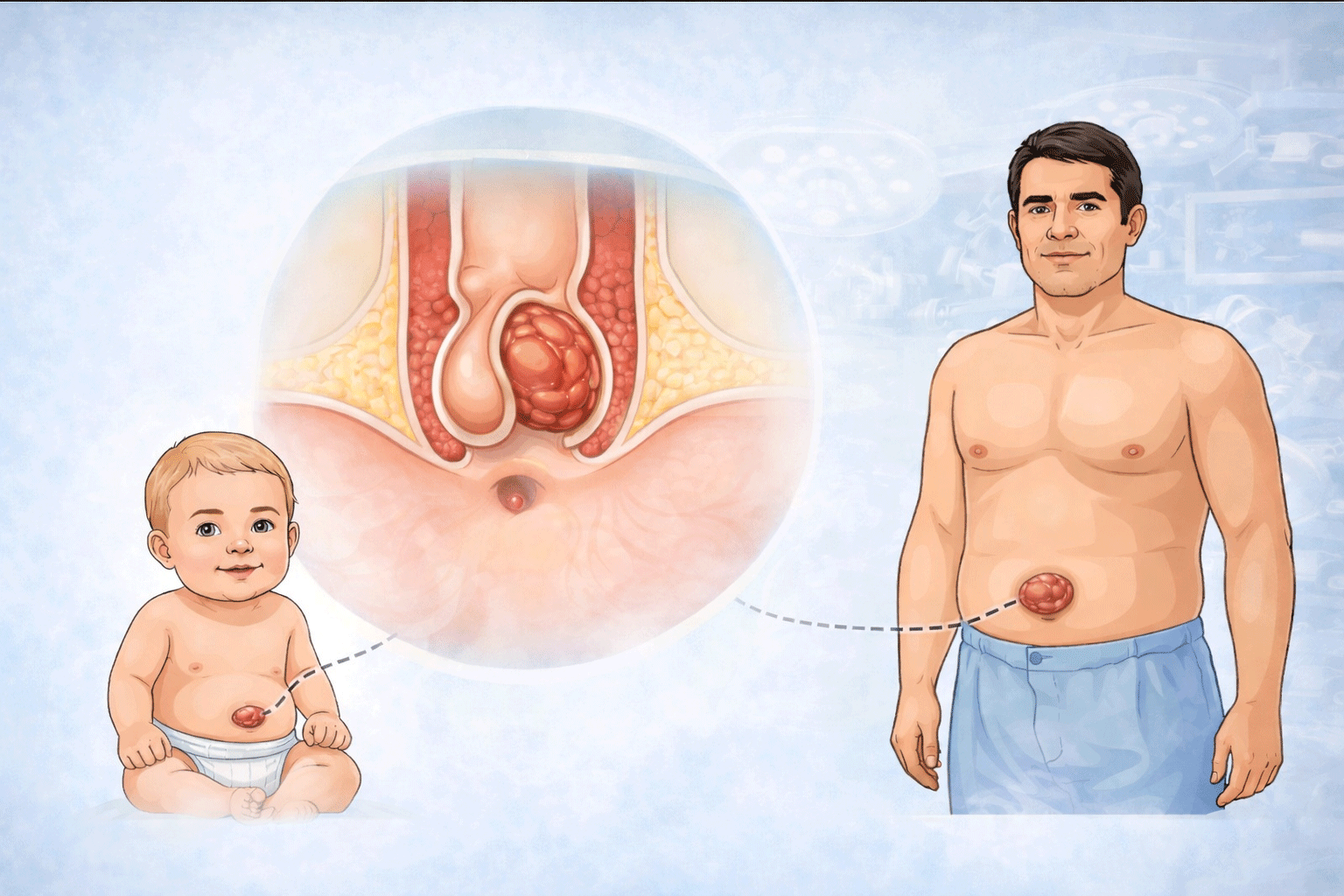
An umbilical hernia occurs when part of the intestine or fatty tissue protrudes through a weak area in the abdominal wall near the navel (umbilicus). It may be seen in both children and adults. Management depends on age, symptom severity, size of the hernia, and overall health condition.
Understanding Umbilical Hernia
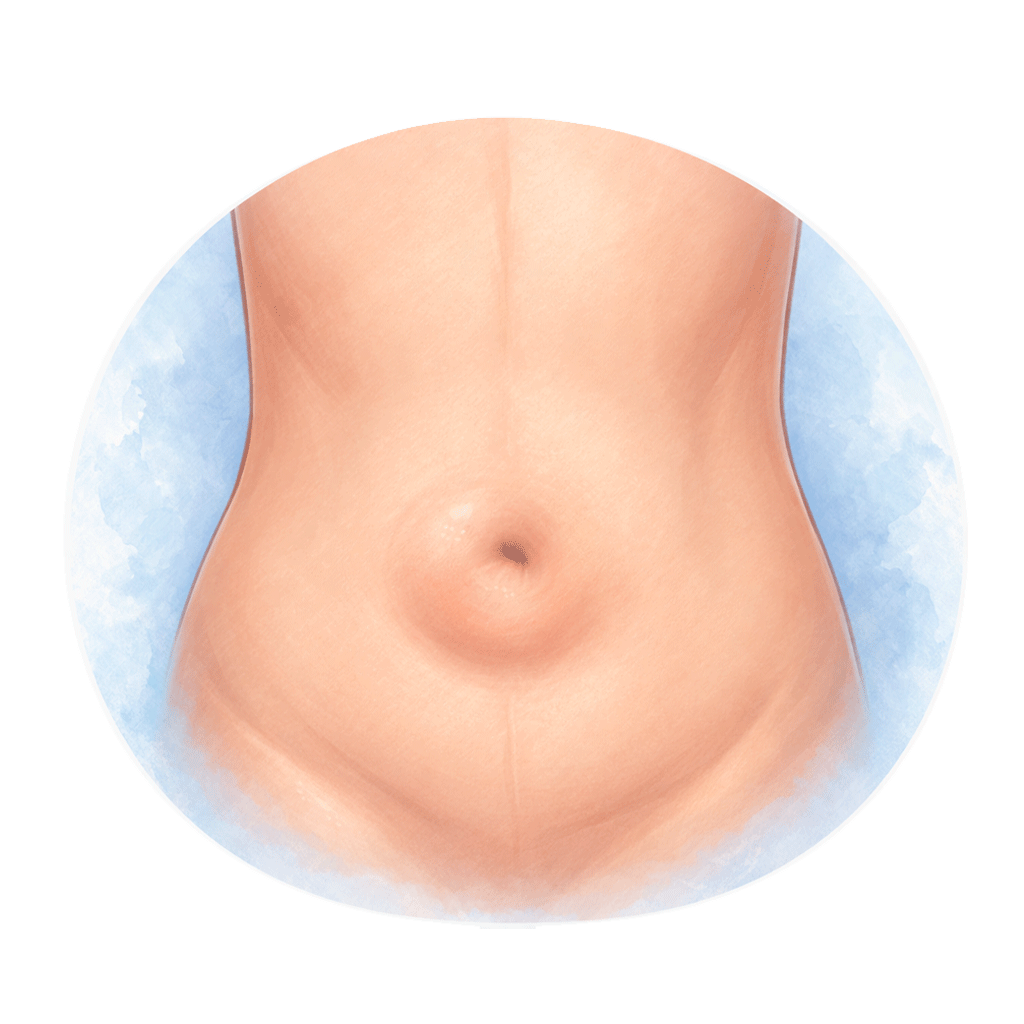
The umbilicus (navel) is a natural weak point in the abdominal wall. In an umbilical hernia, internal tissue pushes through this weakened area, resulting in a visible bulge.
In infants, umbilical hernias are common and often close spontaneously. In adults, they are more likely to persist and may require medical evaluation.
Causes and Risk Factors
Umbilical hernias in adults may be associated with:
• Obesity
• Pregnancy
• Multiple pregnancies
• Chronic cough
• Ascites (fluid in abdomen)
• Heavy lifting
• Previous abdominal surgery
In infants, it occurs due to incomplete closure of the abdominal wall after birth.
Symptoms
Some individuals may remain asymptomatic. When symptoms are present, they may include:
Soft bulge near the navel
More noticeable during coughing or straining.
Feeling of pressure at the umbilicus
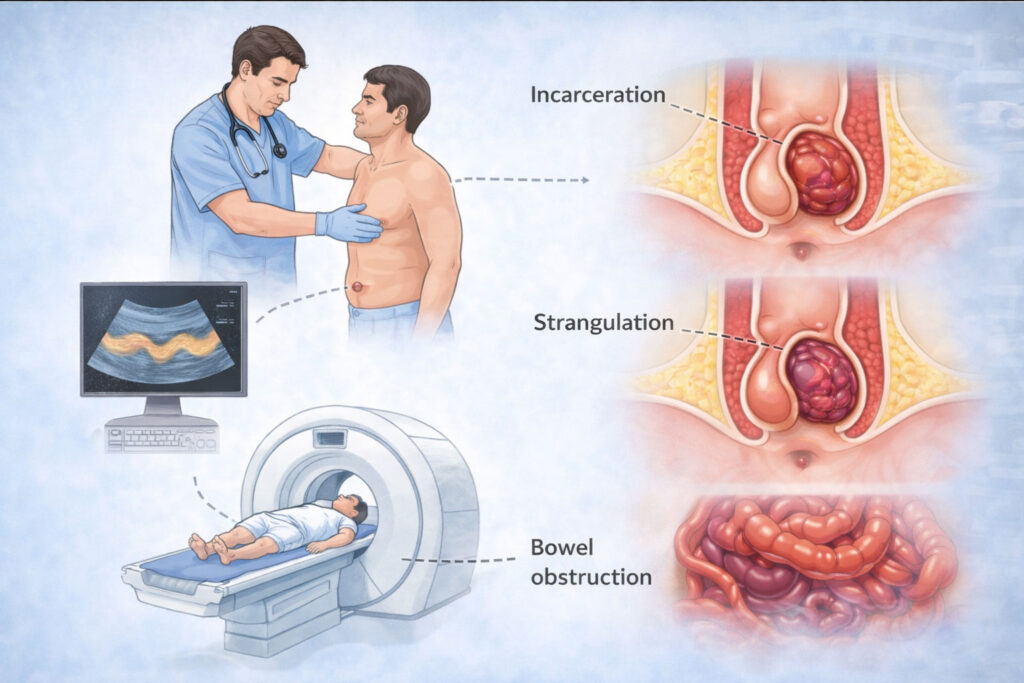
Urgent medical attention is required if there is severe pain, vomiting, redness, or inability to push the swelling back, as these may indicate incarceration or strangulation.
Diagnosis
Diagnosis is usually based on:
• Clinical examination
• Assessment of reducibility (whether swelling can be pushed back)
• Ultrasound abdomen (when required)
• CT scan in selected cases
These investigations help confirm the diagnosis and determine the stage of the disease.
Possible Complications
If untreated, complications may include:
• Incarceration (hernia becomes trapped)
• Strangulation (blood supply to tissue is compromised)
• Bowel obstruction
These conditions require urgent surgical management.
Management Options
Observation
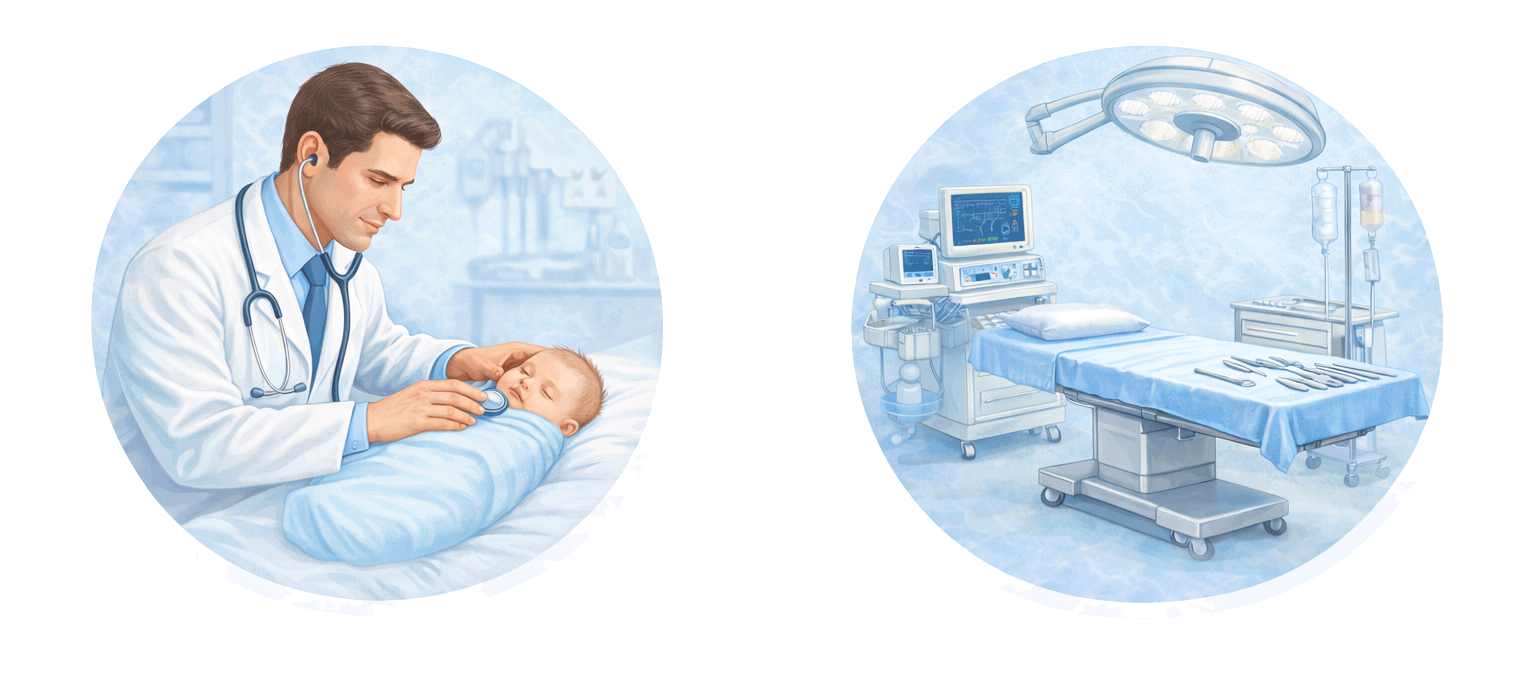
Small, asymptomatic hernias in infants are often monitored, as many close naturally.
Surgical Repair
In adults and symptomatic cases, surgery is commonly recommended.
The goal of surgery is to return protruding tissue to its proper position and reinforce the abdominal wall.
Open Hernia Repair
Repair performed through an incision near the umbilicus.
Mesh Repair
In many adult cases, surgical mesh may be used to strengthen the abdominal wall and reduce recurrence risk.
Laparoscopic Repair
Minimally invasive approach in selected patients.
The choice of technique depends on hernia size, patient health, and clinical findings.
Pre-operative Assessment
Before surgery, patients typically undergo:
• Detailed clinical evaluation
• Anesthesia fitness assessment
• Laboratory investigations
• Imaging studies if indicated
Post-operative Care and Follow-Up
Post-surgical care may include:
• Short hospital stay (depending on procedure)
• Pain management
• Gradual return to daily activities
• Avoidance of heavy lifting for a specified period
• Scheduled follow-up visits
Recovery time varies based on the type of repair performed.
About the Author of This Information
Dr. Rajeev Kapoor is a practicing surgeon based in Mohali, Punjab. He provides clinical services in the field of gastrointestinal, colorectal, and general surgery. This website is intended for informational and educational purposes only.
Disclaimer
The information provided on this page is for general educational purposes only. It is not a substitute for professional medical advice, diagnosis, or treatment. Treatment decisions should be made after consultation with a qualified medical professional, based on individual clinical evaluation.